The post Moving to Portugal as a Software Engineer: Peter’s Relocation Story first appeared on Relocate.me.
]]>Back in 2022, Peter Falope started the process of moving to Portugal on a Digital Nomad visa. He didn’t finish the process. “Due to some other things coming up, I didn’t follow through with the plan,” he told me. “I guess better late than never.”
He said this because, a few years later, he made the move anyway. This time as a Software Engineer at Catawiki, the Dutch curated auction marketplace that has been growing its Lisbon engineering team. The relocation package handled his work visa and the apartment hunt that followed.
But in 2026, moving to Portugal has changed a lot compared to 2022, the year Peter first tried to relocate. AIMA replaced SEF as the immigration agency in 2023 and is still working through a major backlog of pending cases (for some time now, it turns down any residence-permit request that isn’t fully complete when you submit it, according to many Redditors). Also, the Digital Nomad pathway Peter once considered is changing: it’s being overhauled presently, and thus it’s currently on hold. So in 2026 the cleaner route to Portugal is to land a job with a company that sponsors your visa and hands the paperwork to a relocation specialist.
That goes double if you’re moving with family or want a predictable timeline. That’s the route Peter ended up taking, and it’s the one Catawiki has built out for the engineers it brings to its Lisbon office.
We talked about why he chose Portugal, what Catawiki’s hiring process looked like, and what’s surprised him most since arriving. Here’s our conversation.
Peter’s background
- Home country: Nigeria

- Current role: Software Engineer at Catawiki (Lisbon)
- Previous role: Senior Android Engineer
Peter spent the years before his move building Android apps in Nigeria before he joined Catawiki’s growing Lisbon office. Catawiki opened its Portugal headquarters in February 2024, and the engineering team there is one of the company’s hiring priorities for 2026.

What made you choose Portugal as a work abroad destination?
Portugal felt like a natural choice because at some point in 2022, I started the process of moving to Portugal but due to some other things coming up, I didn’t follow through with the plan so I guess better late than never! I am here now and I am happy.
You’re now working at Catawiki as a Software Engineer. Why did you choose Catawiki?
I chose Catawiki because I felt ready for a new challenge in my engineering journey and Catawiki provides the challenge.
 If you want a deeper look at the company itself (tech stack, benefits, leadership, the full relocation package), read Meet Catawiki, Europe’s Leading Curated Auction Marketplace, Now Hiring in Portugal.
How many interview stages did you go through to get this job? How much time passed between the first interview and the job offer?
It took about 6 weeks from the first meeting with the recruiter to my offer and I had 4 interviews excluding the interviews with the recruiter.
My notes: Catawiki’s process is well documented. It runs as a recruiter screening call, a technical round with two developers on CoderPad, and a final stage with one behavioural and two technical interviews. System design (using Miro for diagrams) is part of it, and the rounds depend on the role you’re up for: Backend, Frontend, Android, and so on.
By the way, do you need to know Portuguese to work at Catawiki?
I didn’t need to know Portuguese to join Catawiki, it is an English-speaking company which is impressive because we have people from all over the world.
My notes: This is one of the most common questions I get from engineers eyeing a move to Lisbon. The short answer: no, you don’t need Portuguese (nor Dutch, which is a valid concern considering Catawiki is from the Netherlands). With more than 60 nationalities on staff, English is the working language at Catawiki. If you eventually want Portuguese citizenship via the naturalisation route, you’ll need to learn the language for that step, but not to get hired or settle in. Heads up: Portugal’s revised Nationality Law was signed by the President in May 2026 and extends the residency requirement from 5 to 10 years for most non-EU applicants.
By the way: Catawiki is actively hiring software engineers in Portugal
Catawiki is a Dutch auction marketplace founded in 2008. Every month, 14 million people visit the platform to bid on vintage watches, rare comics, classic cars, and fine art. The company opened its Lisbon office in February 2024 and has been growing it quickly. Portugal is Catawiki’s hiring priority for 2026, and they plan to grow the Lisbon tech team from about 10 to 40 people across engineering, product, UX, and data.
Here are some of Catawiki’s open tech roles with relocation to Lisbon:
- Browse the latest tech roles on Relocate.me: relocate.me/companies-hiring/catawiki
- Browse open roles in Lisbon directly: catawiki.careers/location-lisbon-office

How was the move to Lisbon, and what can you tell us about Catawiki’s relocation assistance?
The move to Lisbon was relatively smooth, I arrived in December and it was much more colder than it usually is at that time of the year so it was a “Wow, this is really cold” kinda moment, some time passed and I have gotten used to it given I relocated from a much warmer climate. Catawiki relocation assistance was good, they hired a company to handle the whole process from Visa application to renting an apartment.
My notes: The partner Peter is talking about is probably Eres, a Lisbon-based firm that helps expats with things like permits, visas (for you and your family), dealing with the local municipality, and even picks up your resident permit on your behalf (this depends on the firm, but this is typically what you’ll receive). Just for your information, on top of the services that partners provide, Catawiki also covers a temporary stay of up to one month at a designated hotel in Lisbon, helps you find an apartment, and offers a session to walk you through local schools if you’re moving with kids aged 4 to 18. All this I covered in the Catawiki article.
A note regarding the cost of living in Lisbon (and where to actually live)
Lisbon is more affordable than Amsterdam or most Western European capitals, but users online usually explain it’s not as cheap as it used to be. Actually, there’s a kind of dissonance in the relationship between the cost of living in Lisbon versus the Portuguese average wage. But the good news is that Lisbon is a genuinely walkable, well-connected city, and you don’t need to live right in the centre. For example, Sintra in particular is a popular landing pad.
Peter mentioned that taxes surprised him, and that’s worth holding onto. Portugal’s social security and income tax brackets can take you by surprise if you haven’t done the math beforehand. This reminded me of a time we were putting together Portugal tax guides, and we were caught off guard with how Portuguese brackets were actually more complicated than France’s (and that’s something!)
What do you enjoy most about living in Lisbon?
I enjoy the weather and scenery, in my country, the sun is usually yellow or orange due to the atmosphere but in Portugal, it is white which gives a whole different look to things, it always still impresses me.
What surprised you most about working or living in Portugal that you didn’t expect?
What surprised me? The weather, scenery and taxes.
Is it true that many digital nomads choose Lisbon?
As in 2022, this was true but I don’t know if this is still the same, I was also going to move to Portugal on a Digital Nomad visa in 2022 but I think since then, things have changed, immigration laws and the changes in the Portuguese law in relation to migrants or immigrants.
My notes: Peter’s read is right. Portugal’s Digital Nomad Visa is changing, and the rules and the broader visa framework have shifted since 2022 (including how the regime for non-habitual residents now treats incoming residents). If you’re seriously considering Portugal as a destination, you can consider going through an employer that sponsors a proper work visa.
What advice would you give to other software engineers thinking about relocating to Portugal or Europe for work?
Take the leap, you won’t be disappointed.
If you’re interested in following Peter’s path and relocating to Portugal, find a job first.
Peter’s story shows how much smoother the move is when you land the right job before moving abroad. A position with a company that hires internationally and offers proper relocation support (visa, hotel for the first weeks, help with the rental market, paperwork for taxes) turns the move into something manageable rather than something that eats your savings.
For tech professionals looking to move to Portugal, Relocate.me connects software engineers with companies like Catawiki that hire internationally and guide new hires through every step of the move. Browse tech jobs with relocation to Portugal, or jump straight to open Catawiki roles in Lisbon if Peter’s path sounds like one you’d like to follow.
Also, subscribe to The Global Move, the internet’s best resource for relocation-friendly jobs for software engineers. I share a curated list of jobs with relocation every week. I hope I can interview you one day!
The post Moving to Portugal as a Software Engineer: Peter’s Relocation Story first appeared on Relocate.me.
]]>The post What People Only Understand About Relocating After It’s Already Over first appeared on Relocate.me.
]]>Relocating has a strange reputation. From the outside, it looks decisive. Boxes taped shut, a moving date circled on the calendar, a new address ready to go. People assume it’s a clean break: stressful, yes, but temporary. Once you’re unpacked, life is supposed to click into place.
What most people don’t realize is that the real weight of relocation doesn’t land until after it’s finished, not during the planning, not on moving day, not even in the first exhausting week surrounded by half-open boxes. It arrives quietly later, once the adrenaline wears off and there’s no checklist left to distract you. Only then do you understand what relocating actually costs. Research on how residential mobility affects mental health shows that major moves can carry lasting emotional impact and adjustment challenges.
To help you prepare, we’ve compiled a list of things people only understand about relocating after it’s already over.
You Don’t Just Leave a Place, You Leave Versions of Yourself
Relocation isn’t only about geography. It quietly dismantles routines that once anchored you. You leave behind the version of yourself who knew where they were going without checking maps. The version who had a dentist, a favorite walking route, and a neighbor to borrow sugar from. Even if you didn’t love your old life, it was familiar. Familiarity has a gravity of its own. This is especially true if you’re moving abroad for a job, to a country you haven’t even visited before.
In a new place, you start again in small, humbling ways. You hesitate before answering questions like, “How long have you lived here?” You second-guess directions. You feel oddly younger, less competent, even if your career and life experience say otherwise. That disorientation surprises people. Especially those who thought the move would feel empowering from day one.
Professional Movers and Brokers Matter More Than You Think
This, too, is something people only understand about relocating after it’s already over. Professional movers don’t just handle boxes; they remove a layer of mental strain at a time when you’re already stretched thin. Having people who know the process, anticipate issues, and manage timing brings a sense of control back into an otherwise unsettled period.
The same applies to brokers. Once you understand how moving brokers work, their value becomes clearer. They coordinate between you and vetted carriers, manage schedules, and step in when plans change. Instead of juggling calls, quotes, and uncertainty, you have one point of contact keeping everything aligned. After the relocation is over, many people realize that peace of mind was what mattered most.
The Logistics Were Never The Hardest Part
Before the move, everything feels practical. Budgets, timelines, school records, lease agreements, shipping delays, negotiating relocation packages, and figuring out the visa application processes. It’s overwhelming, but it’s tangible. There’s always something to fix, call, sign, or chase. After the move, the tasks disappear. That’s when it gets uncomfortable.
There’s no spreadsheet for missing the way your old grocery store smelled, or how your barista knew your order without asking. No moving app warns you about the odd grief that comes from realizing no one here knows your history. You can solve logistics with effort. You can’t rush emotional recalibration, a process recognized in relocation stress research that notes the emotional and physical effects of moving stress.
Loneliness Shows Up in Unexpected Moments
Most people brace themselves for loneliness at night or on weekends. Few expect it to appear on a random Tuesday afternoon. It hits when you want to share a small win and realize there’s no obvious person to text. When something goes wrong, and you don’t have a trusted local contact. When everyone else seems busy living their already-established lives.
You can feel incredibly lonely, whether you’re moving for university or at 30 years old to start fresh in a new city, a new country. You can be surrounded by people and still feel untethered. Relocation doesn’t just remove social circles; it removes context. Jokes don’t land the same. Cultural references need explaining. Even silence feels different. And that loneliness doesn’t mean you made the wrong decision. It means you’re between chapters.
The “Honeymoon Phase” is Real
At first, everything feels new and interesting when you move to a new country or just a new city. The streets are charming. Cafés feel like discoveries. You take photos of ordinary things because they’re unfamiliar. Then one day, the novelty fades. The city hasn’t changed, but your nervous system has settled enough to notice what’s missing. The excitement dips, replaced by irritation or fatigue. You start comparing: how things were easier, cheaper, friendlier “back home.” This phase catches people off guard because it feels like failure. It’s not. It’s an adjustment. Relocation isn’t linear, and liking a place one week doesn’t obligate you to love it the next.
Belonging Takes Longer Than Settling In
You can unpack boxes on the weekend. Belonging takes months, sometimes years. This is also something most people only understand about relocating after it’s already over. Belonging comes from repetition: going to the same places often enough to be recognized, building trust slowly, and learning the unspoken rules of a new environment. It’s not something you can schedule. This gap between “being settled” and “feeling at home” is where many people struggle. From the outside, it looks like everything is fine. From the inside, it feels unfinished. Understanding that this gap exists can be the difference between patience and self-blame.
Your Identity Feels Quieter for a While
In your old life, parts of your identity were reinforced daily. Your role at work. Your reputation. Even your place in your social group. After relocating, those mirrors disappear. You may find yourself asking questions you thought you’d already answered: Who am I here? What do I bring into a room when no one knows me yet? Without realizing it, relocation strips things back to the essentials.
This can feel unsettling, but it can also be clarifying. Many people don’t recognize this until later, when they look back and see how much they reshaped themselves during this in-between period.
Children and Families Feel it Differently
For families, relocation carries an extra layer. Children often adapt faster on the surface, but that doesn’t mean they’re unaffected. Guidance from child mental health professionals explains how moving can trigger emotional responses in children and offers strategies for parents.
They absorb stress quietly. They miss familiar bedrooms, friends, teachers, and routines they didn’t know how to name as important. Adults are busy holding everything together and may only realize later that everyone was grieving something different. Relocation teaches families how to communicate in new ways, sometimes awkwardly, sometimes imperfectly, long after the move is complete.
You Stop Explaining Yourself Eventually
In the early months, you tell your story often, where you’re from. Why did you move? How long do you plan to stay? Over time, the explanations shorten. Not because the story isn’t important, but because the new place starts to feel less like a temporary stop and more like a lived-in reality. What people only understand about relocating after it’s already over is that the shift happens without announcement. One day, you notice you’re no longer measuring everything against your old life. You’re just living.
The post What People Only Understand About Relocating After It’s Already Over first appeared on Relocate.me.
]]>The post Finding a Job in Europe With Visa Sponsorship first appeared on Relocate.me.
]]>Finding work abroad can be overwhelming, from sorting out visas to figuring out job markets. However, despite these challenges, opportunities are waiting to be explored.
Even with the competitive nature of Europe’s job market, armed with the right knowledge, skills, and strategy, finding a foothold in your desired country is well within reach.
One resource that can significantly ease your transition abroad is relocation support.
Typically, with relocation support, companies can cover things like flights and accommodation, and they can help guide you through the visa process, even offering visa sponsorship.
This article will point out the best resources and platforms available to those seeking relocation support and companies that sponsor work visas in Europe.
Among these, Relocate.me stands out as an excellent resource tailored for finding companies that sponsor work visas in Europe for those in the tech sector. But our exploration doesn’t stop there; we’ll spotlight additional resources and platforms to help you find the best international career opportunities.
Your dream job in Europe awaits; with the right information, it’s closer than you think!
It’s a Substack newsletter and supportive community for those looking to relocate abroad for work in tech. Both free & paid membership options are available, with the paid tier providing access to a weekly handpicked list of ~100 tech jobs with visa/relocation support, live resume review sessions, insider hiring insights, and much more.
Why Do You Need Visa Sponsorship in Europe?
Finding jobs in Europe with visa sponsorship can significantly streamline your move abroad. While alternative visa routes exist, such as pursuing a digital nomad visa or applying for a visa yourself once you have a job offer, securing visa sponsorship is less of a headache, making it an important avenue to think about when you’re on the hunt for international job opportunities.
Securing visa sponsorship often begins with finding an employer willing to sponsor your application. This involves taking care of legal documentation and offering logistical support for your relocation.
If you’re wondering, “What’s in it for them?” many companies offer visa sponsorship in Europe to open doors to a broader pool of talent and allow them to access individuals with specialised skills and unique expertise from around the world.
In essence, visa sponsorship in Europe serves as a gateway for both employers and job seekers, enabling talent, knowledge, and opportunities across borders.
How to Find a Job in Europe with Visa Sponsorship
Job seeking abroad, especially in Europe, can be both exhilarating and daunting. The chance to learn about new cultures, move up in your career, and see a wide range of landscapes is definitely appealing. Finding a job that will sponsor your visa, on the other hand, takes some work.
Here are some steps to help with the process:
1. Identify Regions of Interest
Before diving into your job search, it’s crucial to research and identify the specific regions or countries in Europe where you envision yourself living and working.
Consider language, culture, job market demand, and visa regulations.
Websites like Expatistan and Numbeo provide valuable insights into the cost of living in different cities, helping you make informed decisions about your potential destinations. For even more detailed data and comparisons, look into the Cost of Living section on our website.
2. Research Job Market Trends
Once you’ve narrowed down your options, investigate job market trends in your target countries. Look for industries or occupations that are experiencing growth and have a demand for skilled professionals.
Websites like Eurostat and Statista offer exhaustive data on employment trends and industry insights across Europe.
3. Review Visa Requirements
Even if a company is sponsoring your visa, it’s important to familiarise yourself with the visa requirements.
While the company may handle the visa sponsorship process, ultimately, it’s up to you to ensure compliance with visa regulations. Familiarising yourself with these requirements can help you avoid any unintentional violations that could jeopardise your stay in the country.
Additionally, understanding visa requirements can also be beneficial for long-term planning. For example, if you plan to apply for permanent residency or citizenship, knowing the visa pathways and requirements from the beginning can help you make informed decisions and set you on the right track to achieve your goals.
Each country has its own visa regulations, so verifying your eligibility and understanding any limitations is crucial. Websites like the official government immigration portals of your target countries provide detailed information on visa options, regulations, and pathways to citizenship.
4. Use Online Job Search Tools
When conducting your job search, look into dedicated websites like Eurojobs, Glassdoor, and LinkedIn. These platforms offer extensive listings across various industries and locations in Europe, and some websites even filter jobs based on visa sponsorship.
Glassdoor, in particular, is a great resource known for its company reviews and insider information.
Additionally, don’t underestimate the value of local job boards in your target country or region. Whether you’re targeting Berlin’s tech hub or Zurich’s financial epicentre, grassroots platforms often serve as hidden gems, highlighting niche job openings.
5. Take Advantage of Networking Opportunities
Networking is a powerful tool for finding job opportunities abroad. Attend local networking events, job fairs, and industry conferences to connect with professionals in your field.
You can also connect with peers in your field through LinkedIn. Ask to connect, initiate conversations, and make the most of your contacts.
Additionally, if you have a friend already established in your desired location, you can leverage this connection as your entry point to the community.
At The Global Move, one of the strategies we proposed involved using LinkedIn to get a job, because 80% of tech jobs at MAANG are sourced directly by the recruiters. So read the post to learn how to get a job abroad with LinkedIn.
6. Connect With Expats
Finding guidance from fellow expats who have already navigated the challenges of moving to another country can be incredibly helpful.
One way to connect with this community is by joining online forums and social media groups dedicated to expats in your chosen destination. Platforms like Reddit’s r/Expats and InterNations can provide a wealth of information and support.
By tapping into these resources, you can gain valuable insights into the job market, cultural nuances, and practical tips for living abroad.
Don’t hesitate to ask questions and share your own experiences as well!
7. Direct Contact with Companies
Once you’ve identified companies you’re interested in, contact them directly to inquire about job openings and visa sponsorship opportunities.
Highlight your qualifications and explain why you would be a valuable addition to their team.
Websites like Glassdoor and LinkedIn can provide information about company profiles, job postings, and contact details, and remember to visit the specific websites of companies you’re interested in as well. This shows you’ve done your research and are genuinely interested in the organisation.
8. Consider Recruiting Agencies
Collaborating with recruiting agencies that specialise in assisting job seekers looking for opportunities with visa sponsorship can streamline your job search process.
Agencies like Euro London offer recruitment services for international candidates seeking employment in Europe.
9. Be Patient and Persistent
Finding a job in Europe with visa sponsorship may take time, so it’s important to remain patient and persistent in your job search efforts.
Keep refining your strategy, staying updated on job market trends, and networking with professionals in your field. With determination and the right approach, you can increase your chances of securing a rewarding opportunity abroad.
10 Companies Offering Relocation Assistance
When you are job searching, if the job description says “relocation package,” then the company will take care of all the necessary correspondence and paperwork with the embassy to get you your visa.
However, it doesn’t automatically work the other way around, meaning ”visa sponsorship,” even if explicitly mentioned, doesn’t always include a relocation package.
So, with that in mind, here’s a list of companies that offer relocation support, including some well-known American companies hiring overseas:
1. LinkedIn
LinkedIn has established a significant presence across Europe with offices in cities such as Amsterdam, Berlin, Dublin, London, Madrid, Milan, Munich, Paris, and Stockholm.
Recognising the importance of facilitating talent mobility within its workforce, LinkedIn’s Global Mobility initiative ensures that approximately 10% of its employees relocate annually.
LinkedIn wants to make it easier for employees who are moving abroad to get settled in their new roles and environments by helping them move.
2. Centurylink – Lumen
CenturyLink provides relocation assistance to employees and presents numerous job opportunities across Europe.
The level of support provided for relocation depends on business requirements and the employee’s job grade, and the company ensures employees are well-informed about the benefits during the relocation process.
3. BP
BP’s relocation policy ensures that employees and their families receive financial support to ensure a smooth transition abroad. This includes settling-in assistance for your family and spousal employment services.
Additionally, each employee benefits from a dedicated Relocation Coordinator to help you understand these services.
4. Salesforce
Salesforce, an American cloud-based software company, offers an array of services.
Apart from their excellent customer relationship management (CRM) service, they sell a suite of enterprise applications that cater to customer service, marketing automation, analytics, and application development.
Notably, their employee benefits package includes gender-neutral paid parental leave, comprehensive health, dental, and vision insurance, and relocation assistance!
5. Amazon
Amazon is continuously expanding its global presence. Alongside their campuses in the US, they’re setting up locations in London, Berlin, Sevilla, and Malaga.
Amazon’s comprehensive and flexible relocation packages cover everything from moving expenses to school fees for employees’ children.
6. Google
Google is offering all-encompassing relocation packages intended for employees moving to European locations, such as London, Paris, Stockholm, and Dublin.
Depending on the destination, employees may receive an allowance to offset relocation expenses or a pre-arranged package, including temporary housing.
7. Microsoft
It’s clear that Microsoft knows how to make moving easier for expatriates around the world because of its great relocation benefits for employees.
The Microsoft HR team is known for swiftly providing relocation assistance and coverage as needed. The company frequently relocates employees to various locations, including London, Paris, Dublin, Prague, and Cambridge.
8. Meta
Meta (the company behind Facebook, Instagram and WhatsApp) has established a strong reputation for alleviating the anxieties associated with relocating to a foreign country, with many expats attesting to the company’s efforts in fostering a culture of inclusion and belonging.
Meta also offers an exceptional mobility program for interns.
9. Netflix
Netflix is known to always make sure that the international hiring process is fully compliant with legislation at both locations, eliminating any potential hiccups. Additionally, Netflix provides dedicated support teams to assist employees and their families during relocation.
Recently, Netflix has been expanding its European operations and relocating employees to cities such as Berlin, Paris, and Amsterdam.
10. Chevron
Chevron offers full relocation assistance to ensure a smooth start to new jobs, especially in Europe.
Chevron provides financial and logistical assistance, including guidance on the relocation process and the practical aspects of moving. Financial assistance covers expenses related to transportation, temporary accommodation, and other necessary arrangements.
Find a Job in Europe with Visa Sponsorship
The best way to find a job in Europe with visa sponsorship is to track down companies that offer relocation-friendly jobs. The companies we just listed do have a relocation program, but our recent report on relocation-friendly jobs demonstrated that smaller companies are driving the job postings!
Read the Relocation-Friendly Tech Jobs Report (2025) →
Relocate.me is a platform where companies ready to help expats relocate post their jobs. So we propose that you browse our job board and see what job opportunities you have in Europe today. That’s the best way to find a job with visa sponsorship in Europe!
You can also subscribe to The Global Move, our newsletter where we share hand-picked jobs that have relocation support (and quite often visa sponsorship). Or if you want to relocate but don’t know how to go from a work visa to a passport or just need help getting the right paperwork together, we can put you in touch with someone who has done this many times before.
FAQs
What is the best website to find a job in Europe with visa sponsorship?
Relocate.me is the best website for tech professionals to find jobs with visa sponsorship in Europe. Or subscribe to The Global Move newsletter for a weekly list of hand-picked jobs with visa and relocation support.
How can I get a list of visa sponsorship jobs in Europe?
You can browse through the companies we listed above, or you can directly head to a specialised job board that compiles job postings with relocation support. Many companies that offer relocation-friendly jobs might also help you secure your visa.
How do I know if a company will help me relocate?
Look for job descriptions that mention a “relocation package,” as this confirms the company will provide direct support.
The post Finding a Job in Europe With Visa Sponsorship first appeared on Relocate.me.
]]>The post How to Negotiate a Relocation Package first appeared on Relocate.me.
]]>If you’re considering a move abroad, the best way to ensure a stress-free move is by landing a job with a company that offers relocation assistance. With the Employee Relocation Services industry expected to continue to grow, it’s clear that more and more of us are taking the plunge and moving for work.
Europe is quickly becoming a hotspot, eyeing over 25.2% of the market share in 2023 due to its attractive job market for expats. Meanwhile, North America still remains the biggest player, holding more than 41% of the market, thanks to a high volume of corporate moves and a wealth of relocation services. Then comes the Asia Pacific region, the fastest-growing market with a compound annual growth rate (CAGR) of over 22.3%, powered by economic booms in countries like China, India, and Singapore.
But here’s the catch: while relocating is enticing, negotiating your relocation package can be daunting. But, lucky for you, this article simplifies that process. We’ll arm you with actionable steps and insights to ensure you secure a relocation package that suits your needs. So, let’s dive in and prepare you for your upcoming move.
What is a relocation package?
A relocation package is your compensation for moving, provided by your employer to help make the transition to your new job location smoother. Think of it as a bundle of support services and financial aid designed to cover the costs and logistical headaches associated with moving for work. Depending on the company — and your negotiation skills — these packages can vary greatly, from a simple lump sum payment to a comprehensive package of services and aid.
At the heart of it, basic packages usually cover the essentials: think of visa support to ensure you’re legally allowed to work in your new country and moving expenses to transport your belongings from A to B. These are your foundational blocks, ensuring you can legally enter and settle in your new home.
On the flip side, advanced packages are like the deluxe version of relocation assistance. They go above and beyond, offering housing assistance to help you find a place to live — sometimes covering real estate agent fees or temporary accommodation until you find your feet. There’s also adaptation aid, which can include anything from language classes to help you blend in faster to cultural training that eases your transition into a new way of life.
Why should you negotiate?
Negotiating your relocation package involves ensuring it thoroughly supports your move, demonstrating your value to the company, and setting yourself up successfully in your new role. Be aware that some companies might initially offer limited support, such as only providing visa assistance. The richness of your package can depend significantly on how much the company needs you and your negotiating skills.
It’s common for HR departments and companies to offer the basics first. It falls on you to request more comprehensive support that meets all your needs. If you’re in a position where the company is eager to have you, you’ll likely have the leverage to enhance your relocation package.
So, when you are preparing for this phase, keep the following in mind:
- No two moves are the same. Negotiating lets you tweak the package to fit exactly what you need, from housing to schools for your kids.
- Companies offer a wide range of relocation support. Through negotiation, you make sure that your package not only covers what you need for a comfortable move but also addresses expenses so that accepting the job doesn’t result in financial loss for you.
- Sometimes, standard packages skip over the small stuff. Negotiating can add in those extras, like finding a flat or providing temporary stay stipend.
- One size doesn’t fit all. With no standard relocation package across the industry and variations between roles and company sizes, you have the opportunity to negotiate a deal tailored to your unique situation. Larger firms may have set packages, but in smaller companies, or for different seniority levels, you’ll likely need to negotiate.
- Get the most out of it. It’s about getting the maximum support possible. This could mean more money, longer temporary housing, or coverage for those just-in-case scenarios.
Before you begin: Research and preparation
Prepare yourself for the negotiation process by following these steps:
Step 1: Understand standard packages
Industry norms: Start by exploring the typical components included in relocation packages within your industry. These often cover essentials such as moving costs and visa assistance.
Role-specific offers: Keep in mind that offers can vary based on your role and experience. For instance, tech positions might come with more comprehensive relocation benefits — especially because companies are in desperate need.
Company precedents: Look into any existing standards for relocation packages offered by your company or others within the same sector (examples here), especially for employees moving to your intended destination. Check Glassdoor or Blind to see what others have been offered to get a ballpark idea of what you should be offered.
Step 2: Assess your needs
Make a list: Compile a detailed list of all the costs associated with your relocation. This should include visa processing, flights, first the month’s rent & deposit, moving your belongings, and any initial settling-in necessities.
Prioritise: Arrange these needs in order of importance. Critical elements like housing, flights and moving costs should be at the top of your list.
Step 3: Calculate estimated costs
Here’s a practical example, moving from the US to the UK. To calculate the estimated costs of relocating from the US to the UK, let’s break down each component involved in the move. This example will guide you through estimating the total expenses to comprehensively understand your budget needs.
Shipping your belongings
- Cost factors: Choose between sea freight or air freight, consider the volume or weight of your goods, account for the journey distance, and factor in the destination port’s customs duties and the time of year.
- Estimated cost: Ranges from $1,265.7 to $6,328.5, depending on the above factors.
Packing and unpacking services
- Estimated cost: Starting at approximately $126.57 for half a 20ft container (15 cubic meters), with costs increasing with more cargo.
Removals insurance
- Estimated cost: Insurance costs are based on the declared value of your goods, usually ranging from 0.6% to 4% of the total value.
Hiring storage space
- Estimated cost: In the UK, a 100 sq ft storage unit costs about $126.57 per month. In US cities like Los Angeles, this can exceed $200 per month.
Transferring money abroad
- Recommendation: Use services like Wise for lower fees and real exchange rates, potentially saving up to 8x compared to high street banks.
Renting a property
- Estimated cost: For a 1-bedroom apartment in central London, expect to pay around $2,700 per month.
Getting a visa
- Estimated cost: Visa fees range from $912 to $1,900, with prices varying across Europe.
Booking flights
- Estimated cost: Starting from $920, depending on the specific city locations.
Moving your pets
- Estimated cost: Expect to pay between $2,500 and $3,000, based on airline, pet size, and travel arrangements.
Buying new furniture
- Estimated Cost: Furnishing a 2-bedroom house typically costs around $7,000.
The estimated costs for this specific example come to approximately $19,120.92. This figure should be seen as a general guide, with actual costs likely to vary depending on specific circumstances and the chosen services. It’s important to note that costs can significantly differ for a single person compared to a family, affecting the overall expense of the move.
What you should take away from this is that this is the approximate ballpark you are looking at, and that you should account for all of the above-mentioned categories when calculating your estimated costs — making sure that you are prepared to negotiate your relocation package.
How to negotiate your relocation package
Negotiating your relocation package effectively hinges on being well-prepared, direct, and clear about your needs. The timing is crucial; the ideal moments for this discussion are during the interview stages and before signing the contract. Here’s how to approach it:
Step 1: Initiate the conversation
Start the dialogue with your new employer by expressing excitement about the opportunity and then segue into discussing the logistics of your move. In fact, you will probably be asked this straight up if it’s a relocation role or you are interviewing from overseas.
Step 2: Present your case
Use the research and cost estimates you’ve gathered to back up your requests. Explain how each component of the relocation package is crucial for a smooth transition.
You might say, “Based on my research, shipping my household from the US to the EU is approximately $5,000. Covering this expense would significantly ease my move and allow me to focus fully on my new role from day one.”
Step 3: Discuss specifics
Visa and paperwork support: Start by checking if the company has a go-to service for visas and paperwork. If they don’t, suggest the idea of getting external help.
“Dealing with visa stuff can get pretty complicated. Does the company use a specific service for this? If we need to find someone else to help out, it might cost about $1,000. Would the company be okay with covering that if it comes to it?”
Moving expenses: Detail the costs involved, like shipping a 20-foot container or flights for your family. If the offered package is not a lump sum, usually they will ask you for all the bills and reimburse the costs.
“For my family and me to move comfortably, covering the shipping and flights, which total around $7,000, would be incredibly helpful.”
Housing assistance: Talk about the initial costs of securing housing.
“Temporary lodging and real estate services are key for us to find a suitable home quickly. I’ve estimated these costs at around $3,000 for the first month.”
Adaptation support: Discuss how language courses or other adjustment services, often covered by the company’s learning and development budget or provided in-house — especially in startups — can aid you and your family.
“Language courses for us to integrate more smoothly into our new community would cost about $500. Including this in the package would really support our transition.”
Step 4: Understand compromises
Acknowledge that it might not be possible to cover all costs — especially when it comes to smaller companies — and suggest alternatives.
“I understand budget constraints may not allow for full coverage of these costs. Would it be possible to consider a lump-sum payment or partial reimbursements? This could give me the flexibility to allocate funds where they’re most needed.”
By being clear, factual, and reasonable, you can navigate the negotiation process effectively, ensuring both you and your employer are satisfied with the outcome.
After the negotiation
You are nearly there! Make sure to lock in the deal you just made by finalising the details.
It’s critical to get the agreed-upon relocation package documented. This ensures clarity and avoids any future misunderstandings. Request a written summary of the package, and review it to confirm it includes everything discussed. A simple request like, “Can we put the details of our agreement in writing?” will suffice.
Plan B
If the negotiation doesn’t fully meet your needs, be ready with alternatives. This could mean reassessing the job offer or looking into external funding options for your move. Consider your next steps carefully: “If the support offered isn’t sufficient, I may need to explore other options or seek external funding to make my relocation work.”
Ensuring everything is documented after negotiations and having a backup plan ready helps you smoothly transition to your new role, fully prepared for your move.
Find your next tech job abroad with Relocate.me
If you’re searching for that next big opportunity and the idea of working abroad excites you, Relocate.me is a great place to start your search. It’s a platform dedicated to IT jobs worldwide, offering detailed listings from companies that offer relocation packages and support.
Browse tech jobs in Europe and other parts of the world →
The post How to Negotiate a Relocation Package first appeared on Relocate.me.
]]>The post 30 International Companies Hiring first appeared on Relocate.me.
]]>Imagine combining the thrill of exploring new cultures with the stability of a well-respected job. Working abroad is a bold career move, giving you a chance to grow both professionally and personally, while offering unique experiences you won’t find anywhere else.
Take, for example, companies like Google and Amazon, which are on our list. They’re offering opportunities to innovate and excel at the cutting edge of technology. From tech roles in the prestigious City of London to creative positions under the sunny skies of Spain, the opportunities are unlimited.
Benefits? Think broader networks, enhanced adaptability, and a serious boost to your resume. Plus, the personal growth that comes from navigating a new country is invaluable. Are you ready to explore what the world has to offer?
Curated tech jobs & content for relocation seekers  →
→
Companies that hire internationally
As you read this list, you’ll see country flags next to the country name. The flag icon indicates where the company is relocating international employees. For example, Bolt is hiring people to work in Tallinn, Estonia.
And while these companies might be hiring in multiple departments (as listed), that doesn’t mean that all of these roles offer relocation or are open to international applicants. Some departments, such as customer support, operations, or legal, might only be limited to local or regional applicants. So make sure you double-check on the company careers page. In saying that, the companies with vacant Engineering and Software Development roles are open to hiring international applicants. The same goes for some Marketing and Product roles.
Since competition for these international roles is high, having the right resume format tailored to local hiring standards can significantly improve your chances of securing interviews, especially when applying for roles in cities like Sydney.
Let’s uncover some of the best international companies to work for.
1. Bolt 
Cities: Tallinn, Bucharest, Berlin, and Bucharest
Field of activity: Food delivery, car-sharing, micro-mobility
Vacancies: Analytics, Customer Support, Data Science, Legal, Marketing, Micromobility, Operations, Product & Design, Engineering, Ride-Hailing, Mechanics, Fleet Drivers & Warehouse
Bolt is revolutionising urban transportation by offering on-demand services ranging from cars and scooters to e-bikes, aiming to make personal car ownership unnecessary. As a remote-first company, Bolt’s opportunities for physical relocation are limited, focusing primarily on remote roles. However, in special cases requiring relocation, juniors or mid-level employees could negotiate for relocation packages exceeding $10,000, with senior roles receiving custom-tailored support.
Check out current vacancies at Bolt Careers
2. Byborg Enterprises 
Cities: Luxembourg, Budapest
Field of activity: Streaming and entertainment
Vacancies: Software Development, PR and Marketing, Finance, Legal
Byborg Enterprises is a key player in the Docler Group and specialises in streaming for adult websites, marking two decades of growth with a membership surpassing 20 million. The company predominantly recruits in Hungary and Luxembourg, particularly within its expansive software development department. Byborg is known for its generous relocation and visa support, making it an attractive option for professionals in the tech industry.
Find open positions at Byborg Enterprises
3. Creative Fabrica 
Cities: Amsterdam, Remote (Romania)
Field of activity: E-commerce marketplace
Vacancies: Marketing, Engineering, and Operations
Creative Fabrica is an e-commerce marketplace where creators can sell custom digital assets. The team focuses on a variety of projects, including developing a social network, tools for digital asset management, CF Fans for follower engagement, and CF Classes for online learning from experienced designers. Based in Amsterdam, the company offers visa services and relocation bonuses, accommodating both local and remote team members.
Discover job openings at Creative Fabrica Careers
4. enmacc 
Cities: Munich
Field of activity: Energy trading platform
Vacancies: Roles in Engineering, Marketing and Revenue
Enmacc is Europe’s top platform for trading energy and environmental commodities, making trading simpler and more efficient. It connects over 500 companies and 2,000 members to trade things like electricity, gas, and other key environmental commodities, improving market access. The platform serves a broad user base, from energy suppliers to utility companies, all working towards a better energy future. Launched in 2016, enmacc has built a team of 80 people across Europe, driven by a love for energy and tech. They’re committed to a diverse and inclusive workplace and are always looking for new team members. The latest funding round was Sep 28, 2022 (series B). For several positions, full relocation assistance and visa sponsorships are guaranteed.
Find job openings at enmacc Careers
5. epilot GmbH
Cities: Cologne, Remote (Europe)
Field of activity: Cloud software for energy companies
Vacancies: Engineering, Product, and Sales
Epilot digitises the energy industry with its unique cloud software from the heart of Cologne. As a rapidly growing scale-up, their mission is to revolutionise how market partners within the energy sector collaborate to deliver products and services. They provide a vast network of partners within the cloud world, constantly expanding thanks to the contributions of their community. Product and sales roles are primarily on-site in Cologne and targeted towards German speakers. Remote opportunities are offered to Engineering roles (which are also English-speaking).
Find your next position at epilot Careers
6. Eurowings Digital
Cities: Cologne, Remote (within Germany)
Field of activity: Travel services
Vacancies: Business Intelligence, Data, Engineering, and Web Development
Eurowings Digital is a travel platform under the Eurowings Group (also owns Ryanair and EasyJet) that offers a range of features to make the booking process hassle-free. Serving over 140 destinations across Europe and operating from 11 international bases, including Mallorca, Eurowings has become one of the continent’s leading leisure airlines. For those requiring a move, a relocation package along with tailored assistance for visa or work permit processes is available, depending on the position.
Browse openings at Eurowings Digital
7. Exness 
Cities: Limassol (Cyprus), Remote
Field of activity: Online trading platform (Securities)
Vacancies: AML analyst, big data engineer, business system analyst, application security engineer + many more
Exness is a global multi-asset broker with around 1,800 staff, focusing on providing exceptional trading products for experienced traders. The diverse team, hailing from numerous countries and prestigious IT backgrounds, works predominantly from their main development office in Limassol, Cyprus, where they offer comprehensive relocation support.
Search for vacancies at Exness
8. Freeletics
Cities: Munich
Field of activity: Fitness tech
Vacancies: Marketing and Engineering
Freeletics offers AI-powered fitness and mindset coaching to help users improve their health. Most jobs require German and are in Munich, but marketing positions are available internationally. They provide relocation assistance, including visa and agency fees, to make moving easier for new employees.
Browse jobs at Freeletics
9. grape 
Cities: Zurich
Field of activity: Health insurance
Vacancies: Engineering, Product, HR
Grape offers customers fully digital employee insurance combined with healthcare services. They are an employee insurer centred around a comprehensive technology platform. German-speaking roles, onsite and hybrid positions in Zurich.
Find open positions at Grape
10. HAWK:AI
Cities: Munich
Field of activity: Financial services
Vacancies: Engineering, Business Development, Marketing, Product and Solutions
HAWK:AI develops technology to detect financial crimes, using machine learning for real-time global transaction screening. The company, which recently raised $17 million in Series B funding, offers positions that require on-site presence in Munich, focusing on creating impactful solutions to combat money laundering and fraud.
Browse jobs at HAWK:AI
11. HelloBetter
Cities: Berlin, Hamburg, Paris, Remote
Field of activity: mental health services
Vacancies: Business Development, Engineering, Product, Therapeutic Services
HelloBetter is on a mission to make effective psychological support accessible to everyone, at no cost and without waiting lists. Founded from university research in 2015, it offers a range of online therapy programs covered by health insurance in Germany. These programs target various mental health issues, providing immediate help. HelloBetter’s qualified team supports users through their journey to better mental health and contributes to destigmatising mental illness. As a pioneer in digital health solutions, HelloBetter is making significant strides in making psychological support widely available. English-speaking office.
Browse jobs at HelloBetter
12. The Honest Company 
Cities: Bangkok, Jakarta
Field of activity: FinTech
Vacancies: Engineering, Data, Fraud, Product and Design, Marketing
The Honest Company develops financial products aimed at improving people’s lives by ensuring fairness and easy understanding. They’re hiring for full-time, on-site positions in Bangkok and Jakarta.
Find your next job at The Honest Company
13. ICEYE 
Cities: Espoo (Finland), Warsaw, Singapore, US, Remote
Field of activity: Aerospace
Vacancies: Engineering, Product, Data
ICEYE is developing and managing a proprietary constellation of commercial radar imaging satellites, offering SAR data to clients. This enables better decision-making for both government and commercial sectors by providing timely and dependable SAR satellite imagery. ICEYE addresses the pressing need for actionable information with pioneering aerospace technology and a fresh New Space perspective. The company’s radar satellite imaging service offers frequent, round-the-clock coverage, aiding in tackling challenges across maritime, disaster management, insurance, and finance sectors. To applicants, the company offers remote, hybrid, and on-site positions, with the majority in Finland. For those relocating, ICEYE ensures full support from a third-party relocation service provider.
Browse jobs at ICEYE Careers
14. Insify
Cities: Amsterdam
Field of activity: Insurance
Vacancies: Finance, Growth, Operations, HR, Product
Insify simplifies insurance for freelancers and entrepreneurs with quick, online services. The majority of their roles are based in their Amsterdam headquarters and in Liege, requiring on-site attendance. They provide visa sponsorship and relocation support for those who need it.
Find open positions at Insify
15. IO Interactive 
Cities: Copenhagen, Malmö, Barcelona, Istanbul and Brighton
Field of activity: Computer games
Vacancies: Design, Marketing, Production, Software Development, HR
IO Interactive, with a rich 25-year history, crafts iconic games like HITMAN and is currently developing Project 007 and Project Fantasy, leveraging their Glacier game engine. They focus on engine development and exploring new game mechanics. Offering hybrid remote roles, they provide extensive relocation support, including visa and work permit assistance, apartment hunting, tax office registration, bank setup, and spouse career integration, ensuring a smooth transition for you and your family.
Browse jobs at IO Interactive
16. limehome
Cities: Munich, Dusseldorf, Vienna, Frankfurt am Main, Madrid, Milan
Field of activity: Hospitality, travel accommodations
Vacancies: Accounting and Corporate Finance, Guest Experience, Hospitality Operations, Property Development, Real Estate and Expansion
Limehome is swiftly becoming a top choice in hospitality, blending modern comforts and technology for today’s travellers. Guests enjoy private suites with contemporary amenities at great value. With ambitions to be the first choice for travellers worldwide, they currently operate over 200 properties across Europe, signalling a promising expansion. Hybrid office model is available in all locations.
Find your next job at limehome
17. Money Forward, Inc. 
Cities: Osaka, Fukuoka
Field of activity: Technology, information, internet
Vacancies: HR, Software Engineering, Security, Design, Marketing
Money Forward revolutionises personal finance management by offering services that make money management easier for everyone. With their 2021 Englishnisation policy, they’ve minimised Japanese language requirements for Engineering roles, while also offering language training to support international employees. They provide comprehensive relocation support including visa sponsorship, flight tickets, airport pick-up, a temporary furnished apartment with a first month free and corporate discounts for the following months, a relocation bonus, and settling-in assistance such as city office and bank account opening tours, plus info on mobile plans and credit cards.
Browse jobs at Money Forward, Inc.
18. Monzo Bank 
Cities: London, Cardiff, San Franciso, New York, Remote
Field of activity: FinTech, digital banking
Vacancies: Customer Operations, Data, Software Engineering, Finance, Information Security, Marketing and Community, Product, Risk and Compliance
Monzo, an innovative online banking platform, strives to provide the ultimate current account, acting as a smart hub for users’ financial lives through collaborations with diverse providers. Focused on engineering roles, Monzo offers both remote and on-site positions in the UK, with visa sponsorship available for specific roles such as technology, engineering, and product, adhering to Home Office regulations.
Find a job at Monzo
19. Nimble
Cities: Bangkok, Da Nang, Ho Chi Minh City
Field of activity: Web and mobile app development
Vacancies: Software Developer, Design, Product
Nimble is a collective of designers, software developers, and product owners dedicated to crafting exceptional web and mobile applications for companies of all sizes, ranging from solo startups to Fortune 500 giants. Located in Thailand, Nimble offers both on-site and hybrid work arrangements, with all positions requiring proficiency in the English language. They provide visa and work permit assistance for foreign candidates, along with relocation support to facilitate the move for those living abroad.
Browse jobs at Nimble
20. Novo Nordisk
Cities: Denmark: Bagsværd, Gentofte, and Søborg, Bangalore, Koriyama, Tianjin, Santiago, Grand Rapids, Beijing, Chartres, Warsaw
Field of activity: Pharmaceutical engineering
Vacancies: Research, Sales, Business Development, Manufacturing, Quality, Project Management, Digital and IT, Marketing, Education, Finance
Novo Nordisk, established in 1923 in Denmark, is a leading global healthcare company dedicated to combating serious chronic conditions, particularly diabetes. By pushing the boundaries of medical science, enhancing treatment accessibility, and working on disease prevention and potential cures, they make a significant impact. With approximately 63,400 employees across 80 countries, Novo Nordisk is a substantial entity continually looking to fill hundreds of roles, primarily in manufacturing, quality, and project management, available worldwide. The company offers a relocation package for tech positions to support new hires in making a smooth transition to their new roles and locations.
Look for open positions at Novo Nordisk
21. Odoo 
Cities: Gandhinagar, Louvain La Neuve, Hong Kong, Antwerp, Berlin, San Francisco, Barcelona
Field of activity: Software development
Vacancies: Sales, Marketing, Finance, Business Services, Web Design, Research and Development
Odoo SA works on Odoo, an open-source set of integrated business apps. It’s supported by a community of over 1,500 members who have added more than 4,500 modules to it and so the company continues to grow. Most job openings are in Belgium and India. If you’re moving from another country for a job with Odoo in Belgium, they’ll pay for your first month’s rent and your flight ticket to Belgium.
Browse openings at Odoo
22. Outreach 
Cities: Atlanta, San Franciso, Seattle, London, Mexico City, Prague, New York, Hyderabad
Field of activity: Technology, sales
Vacancies: Sales, Customer Success, Finance and Legal, IT, Product, Analytics, Marketing, Accounting, Engineering
Outreach develops a top sales execution platform that helps teams streamline activities facing the market, improving their efficiency in generating and closing sales pipelines. The platform is used by over 5,500 companies, including Zoom and Siemens. Outreach frequently hires for various positions, offering hybrid, remote, and on-site work options. Headquartered in Seattle.
Search for jobs at Outreach
23. Oxa
Cities: Oxford, Toronto, Orlando
Field of activity: Computer vision, software development
Vacancies: Engineering, Quality Assurance
Oxa specialises in computer science, AI, robotics, and machine learning, focusing on significant challenges in autonomous vehicle technology. With $225 million in funding from leading investors, including $140 million from a Series C round in January 2023, Oxa is expanding and hiring for various positions. Current openings are primarily in Oxford and Toronto. The company supports new hires with relocation assistance and a fully-funded visa program.
Apply for jobs at Oxa
24. Personio 


Cities: Munich, Berlin, Dublin, London, Amsterdam, Barcelona, Madrid, New York
Field of activity: Software development in HR
Vacancies: Product, Customer Experience, Sales, Marketing, Finance, Data
Personio offers software to simplify HR tasks, making it easier for HR teams to handle more than just the basics. They have remote work options available and provide a generous relocation package for those who need to move for their job.
Find a job at Personio
25. Protolabs
Cities: Amsterdam, Chicago
Field of activity: Industrial machinery manufacturing
Vacancies: Engineering, Product, Support, Sales, Logistics, Mechanical Engineering, Quality and Control
Protolabs specialises in digital manufacturing services, such as prototyping and production, offering injection molding, CNC machining, 3D printing, and sheet metal fabrication. They support remote and hybrid work, with many positions based in Amsterdam. For those moving for work, Protolabs offers an advanced relocation package.
Apply for jobs at Protolabs
26. Splash Damage
Cities: Bromley, UK
Field of activity: Game development
Vacancies: Programming, Design, Art, Production
Splash Damage, with over 20 years of experience, excels in creating team-based multiplayer games, earning significant recognition such as a “World-Class” accreditation and ranking among the UK’s 100 Best Large Companies to Work For. They offer visa support and relocation packages if needed and have a 4-day working week policy.
Browse open positions at Splash Damage
27. Stockly 
Cities: Paris
Field of activity: Internet publishing, eCommerce, retail
Vacancies: Software Engineer, HR
Stockly is revolutionising e-commerce by building a global network for shared inventory, enabling online stores to access stock seamlessly. Based in Paris, they require English proficiency and offer a comprehensive relocation package which includes perks like temporary housing, flight tickets, and a relocation bonus to assist new hires in moving.
Browse jobs at Stockly
28. SYBO
Cities: Copenhagen
Field of activity: Computer Games
Vacancies: Engineering, Technology, Internships
SYBO Games, the independent studio behind the massively successful Subway Surfers, is known for creating one of the world’s most downloaded apps. They offer a generous relocation package, which includes covering moving costs, flight, and visa, among others. They also offer the flexibility to start remotely before all relocation arrangements are finalised.
Find a job at SYBO
29. TOPIC Embedded Systems
Cities: Best (Netherlands)
Field of activity: Software Development
Vacancies: Software Engineering
TOPIC Embedded Systems specialises in developing embedded systems critical to the products of leading high-tech companies worldwide. Their expertise spans low-level embedded software, application software, user interfaces, web and mobile applications, and FPGAs. Offering consultancy, on-site projects, and in-house development, TOPIC also creates embedded products like Miami, Florida, and Dyplo, often integrating them into client solutions. All positions are on site and in the Netherlands.
Find a job at TOPIC Embedded Systems
30. Volvo Cars 
Cities: Pederneiras, Göteborg, Greensboro, Augsburg, Aschheim, Ulm, Lyon, Nlacktown, Beresfield, Berlin, Dublin
Field of activity: Motor vehicle manufacturing
Vacancies: Production, Sales, Engineering, Supply Chain, Real Estate, Technology Engineering, Project Management
Volvo Cars, a well-known car manufacturer, focuses on creating safer and more environmentally friendly cars. With over 40,000 employees worldwide, they provide extensive help if you need to relocate for work. This help includes handling immigration and permits, finding you a place to live, helping you get to know the area, managing your moving expenses, and even offering cultural training.
Browse jobs at Volvo
Find your next adventure with Relocate.me
Eager to kick-start your adventure abroad without the hassle? Relocate.me specialises in connecting tech professionals with companies eager to hire talent from abroad, focusing solely on international hiring for companies that offer positions that include relocation.
Start your developer job search and see where your skills can lead you, with the peace of mind that comes from knowing the moving details are handled.
Your international career awaits!
You might also want to read: 11 American Companies Hiring Overseas
The post 30 International Companies Hiring first appeared on Relocate.me.
]]>The post 20 Highest-Paying Jobs in Europe for Non-EU Citizens first appeared on Relocate.me.
]]>If you’ve made it this far, chances are you have the plan, the idea, or the desire to set off for a new life in Europe. In this article, we’ll introduce you to 20 of the highest-paying jobs in Europe. If you’re just starting out, take note, and if you’re a senior, see if you can spot your specialisation!
Remember that some roles may fit into multiple categories because of the overlap of technologies and skills across industries. This list offers a general categorisation based on the role’s primary focus. In addition, so that you can read the blog more fluently, we’ll pick out the average salaries in both the UK and Germany so you can get a better idea of pay differences.
Curated tech jobs & content for relocation seekers, delivered weekly →
Tech-related jobs are a priority in Europe
There is a high demand for tech talent in various sectors of the European market. Job growth is vigorous and has surpassed pre-pandemic levels.
Skilled non-EU citizens can definitely find opportunities in European tech. Visa processes and regulations can be complex, but a talent shortage in areas such as data science, cybersecurity, and cloud computing creates fast-tracked pathways for qualified individuals.
Most countries such as Germany, the Netherlands, and Ireland have also implemented programs specifically to attract international tech talent. Okay — let’s see which opportunities are out there for devs and IT workers in Europe.
Data-Driven Developer Resume to Get Interviews →
Software development and engineering
- Senior Software Architect: You’ll design and develop software solutions for various organisations. Even as a non-EU citizen, being a Senior Software Architect in Europe offers exciting prospects: high demand, competitive pay and diverse environments.
Average salary: £102,763 | €81,500 | Jobs →
- Software Engineering Manager: It’s the backbone of software development, guiding teams to deliver high-quality products on time and within budget. This role demands a blend of technical expertise, leadership, and people management skills that are both challenging and rewarding (and not just from a cash perspective).
Average salary: £91,706 | €96,000 | Jobs →
- Mobile App Developer: It consists of creating and maintaining software applications for smartphones and tablets. The mobile app industry is growing fast, creating many job opportunities and offering competitive salaries.
Average salary: £34,779 | €58,500 | Jobs →
- Full-Stack Developer: As a Full-Stack Dev, your role includes both front-end and back-end coding, allowing you to work on all aspects of web application development. This includes creating user interfaces, implementing server-side logic and working on integrations. Full-stack skills are highly sought-after.
Average salary: £47,916 | €60,000 | Jobs →
- Frontend Developer: A frontend dev is responsible for translating design mock-ups into functional and visually appealing interfaces for users to interact with. They use programming languages like HTML, CSS, and JavaScript to frame user experiences.
Average salary: £43,433 | €55,000 | Jobs →
- DevOps Engineer: DevOps Engineers bridge the gap between development and operations for software delivery. They possess both technical expertise and operational understanding, automating processes, deploying applications and monitoring performance.
Average salary: £48,474 | €65,800 | Jobs →
How to Find Unadvertised (Developer) Jobs →
Data and AI
- Data Scientist: The job involves working with large datasets, employing statistical techniques and using machine learning algorithms to uncover patterns, trends, and correlations. European data science offers promising prospects for skilled individuals, regardless of nationality. Demand is high, with competitive salaries and worthwhile work across industries.
Average salary: £47,930 | €70,172 | Jobs →
- Machine Learning Engineer: MLEs are responsible for designing intelligent systems that use data and algorithms to solve complex problems in various fields. This role requires technical expertise and creative problem-solving skills.
Average salary: £64,986 | €65,000 | Jobs →
- Big Data Engineer: They handle the ever-growing data supply, building and maintaining infrastructure to extract valuable insights. The work involves technical complexities in distributed systems and data processing, problem-solving, and collaboration.
Average salary: £46,324 | €70,000
- AI Engineer: Being an AI Engineer involves developing and implementing artificial intelligence solutions to solve complex problems. As an AI Engineer, you would work with machine learning algorithms, deep learning models and other AI techniques to create intelligent systems that can analyse data, learn from it and make informed decisions.
Average salary: £56,242 | €70,000
- Database Administrator: The primary responsibility of a database administrator generally focuses on the technical aspects of maintaining and securing databases, ensuring performance and uptime. Most database administration tools and procedures fall under the umbrella of IT infrastructure management.
Average salary: £46,713 | €59,000
Cloud and infrastructure
- Cloud Architect: Being a Cloud Architect involves designing, implementing and managing cloud-based solutions for organisations. Europe faces a significant shortage of skilled cloud professionals, and the skills required for cloud architects are in high demand across various industries, including finance, healthcare, retail, and manufacturing. Even cloud vendors might request your help.
Average salary: £84,577 | €78,822
- Information Systems Security Engineer: ISSEs protect digital assets and systems from online threats. With technical expertise and strategic thinking, they build a stable security architecture, detect and respond to intrusions and ensure compliance with regulations. This role is typically featured on “there’s a shortage of” lists. Still, the stakes are very high, so it’s only for ice-cold professionals.
Average salary: £61,727 | €60,259 | Jobs →
Emerging technologies
- Internet of Things (IoT) Solution Architect: As an IoT Solution Architect, your role would involve designing and implementing IoT solutions. Governments with budgets for “innovation” or “city tech,” for example, could hire you to make traffic lights connected to the internet.
Average salary: £76,935 | €80,000
- Blockchain Engineer: As a Blockchain Engineer, you would work on developing and implementing blockchain solutions for various industries and applications. Of all the roles outlined in this article, this is definitely the most unstable — but the rewards could be worth it.
Non-technology roles
The European job market also provides various opportunities for skilled non-EU citizens in non-tech roles. However, thorough research is key. While Product Management and International Sales benefit from multilingual skills, Management Consulting and Investment Banking face stiffer competition. These are some highest-paying jobs for non-EU citizens:
Business and management
- Product Manager: Product Managers act as the user’s voice, leading the development and growth of digital products. They bridge the gap between business goals, user needs, and technical feasibility. Someone with a track record working as a product manager in any country will be considered for this role.
Average salary: £60,458 | €65,000 | Jobs →
- Management Consultant: Management Consultants act as strategic advisors, helping organisations improve their performance. Consulting firms are typically very, very global, even if their HQs are in the United States, so this job is likely to accept non-EU citizens, provided paperwork is sorted out first. The salaries here are lowballed toward beginners. Consulting partners take home considerably bigger cuts.
Average salary: £50,000 | €62,779
- Investment Banker: Investment Bankers act as financial matchmakers. They must operate in a high-pressure environment driven by deal-making and trading short-term. Cities such as London, Geneva, Frankfurt, Zurich, and Luxembourg are deemed financial capitals, and investment bankers with careers in other big markets, such as Hong Kong or Mumbai, could certainly land a job in Europe with good pay. The salaries we show here might be a starting point…
Average salary: £64,500 | €79,000
Sales and marketing
- International Sales Manager: The European sales market has a growing demand for multilingual professionals with cultural understanding. Companies are increasingly looking to expand their reach into new markets, and international sales managers can make it happen. If you coincidentally have sales experience in the territory the company wants to expand in, then you’ve hit the jackpot, since you could easily win a race against a European candidate. Remember that sales roles are typically compensated with variable pay.
Average salary: £48,814 | €59,726
Mechanical engineering
- Aeronautical Engineer: As an Aeronautical Engineer, you would design, develop and maintain aircraft and spacecraft. Your role would include various engineering aspects, including aerodynamics, materials science, propulsion systems and structural design. These are the same tasks you’d have to handle anywhere in the world. But the Benelux region is known for its aviation and aeronautics sector, which means there’s a considerable job market there.
The post 20 Highest-Paying Jobs in Europe for Non-EU Citizens first appeared on Relocate.me.
]]>The post Best Sites To Hire Great Software Developers first appeared on Relocate.me.
]]>If you’re an HR recruiter, you’ll know first-hand that the gap between the supply and demand of developers is still a bottleneck. The C-levels ask for the best programmer out there to scale up your company’s products, but finding the right fit is difficult. Some reasons for this include:
- A lack of applicants with the necessary skills and training: Your region could’ve already run out of skilled software engineers seeking employment.
- Global competition for talent: Better salaries will tilt a developer’s scale, and some companies from markets that weren’t on the radar 20 years ago are now offering better salaries to devs in your country, ruling you out of the contest. Companies worldwide go toe-to-toe for the best programmers, making it difficult for small and medium-sized businesses to find the developers they need.
- Hesitance to hire junior talent: Recruiters are often required to bring in the best developers in the market, and junior talent, which is more available as the competition hasn’t taken it, is too risky to hire. It could turn out to be a great match, but asking a recent bootcamp graduate to take on a project overseen by the CEO could also cut a recruiter’s career short.
- Hiring freezes—and lower offers to work with: Ever since the tech layoffs in the US began shaking the job market, recruiters have been forced to send job offers with lower salaries, making their companies seem less competitive. Hiring freezes being called up and called off without notice certainly doesn’t help.
We’ll present 10+ websites to help you attract the best programmers for your company.
First, a disclaimer: we won’t review the bigger and most well-known portals like LinkedIn, Indeed, Monster, Glassdoor, or Wellfound for obvious reasons. Those are not specialised sites, and finding suitable candidates over there is very hard. That said, let’s get started.
Tech-focused platforms
These are the best developer-focused job boards to hire software developers, search for programmers, or hire IT staff. Some of them are very selective and offer curated opportunities to candidates (and thus fewer but more qualified applicants to recruiters), while others are more broad and a bit harder to navigate.
Relocate.me
Works best for: Recruiters that want to access global talent and hire internationally. Businesses worldwide can use the platform to hire software developers and tech talent.
Relocate.me, an IT niche job board for techies looking to relocate, is the best option for hiring international talent. We work with techies from more than 150 countries, and our job posts have more than 2,000 views per month on the website alone. You’ll connect with talent that’s already motivated to start a relocation process. When you post an ad, you’ll reach our developer network of techies who’re looking for relocation jobs. So, by working with Relocate.me, you will:
- Attract international talent: That’s what jobseekers visit our platform for — to relocate with a job at your company. You’ll level up your employer brand if your company offers strong relocation support and exciting international opportunities. Posting remote jobs is also possible!
- Target your ads and your hiring efforts: Our Advanced plan includes candidate vetting and promotion in our email newsletters.
- Have a company page: Our plans include an enhanced company page with a custom URL.
- Get your company/jobs promoted on Telegram: Relocate.me has an active community on Telegram, which is already over 22k international job seekers strong (and growing by the day).
- Pay no additional or hidden fees for successful hires: Pay only for the job ads, never for the hire. Our pricing is transparent and scalable. You don’t have to pay for a hire. Check out what’s included in each plan and how much it’ll cost you per job slot by visiting our Employers page.
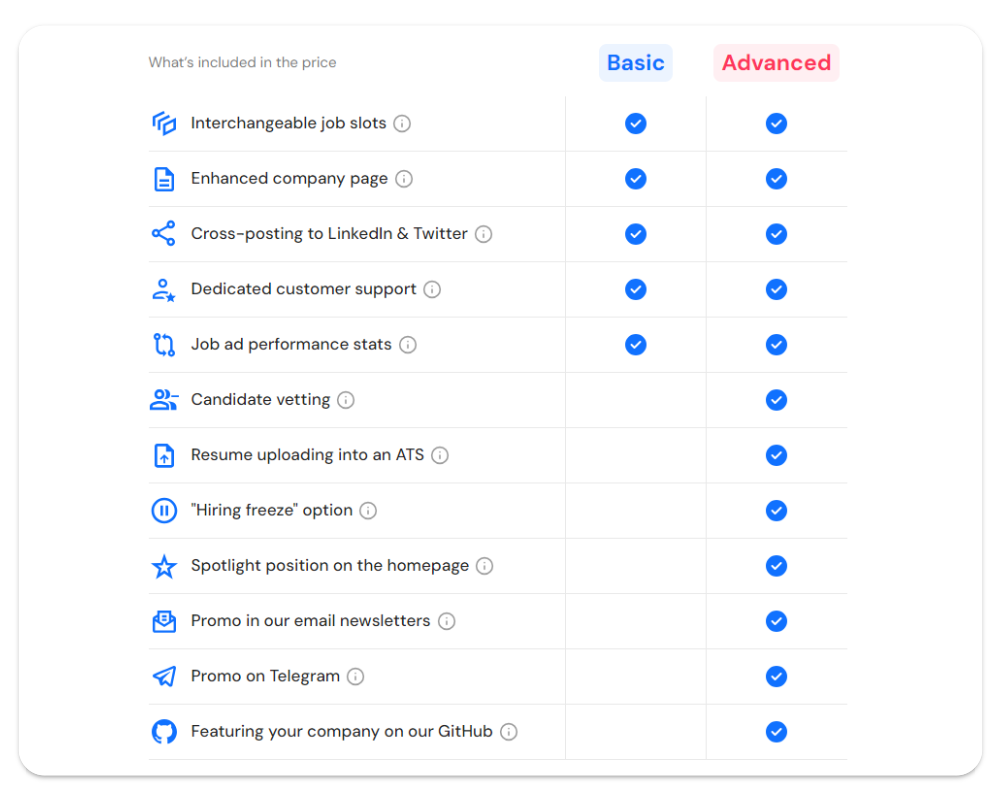
One overlooked aspect about international talent who wants to relocate is that it’s a very attractive demographic. A professional who wishes to move is usually around 30 years old, which suggests they have 5–8 years of work with them. So, if you need senior developers to join your team, and you haven’t found those on the domestic market, then hiring internationally can help you overcome the talent gap.
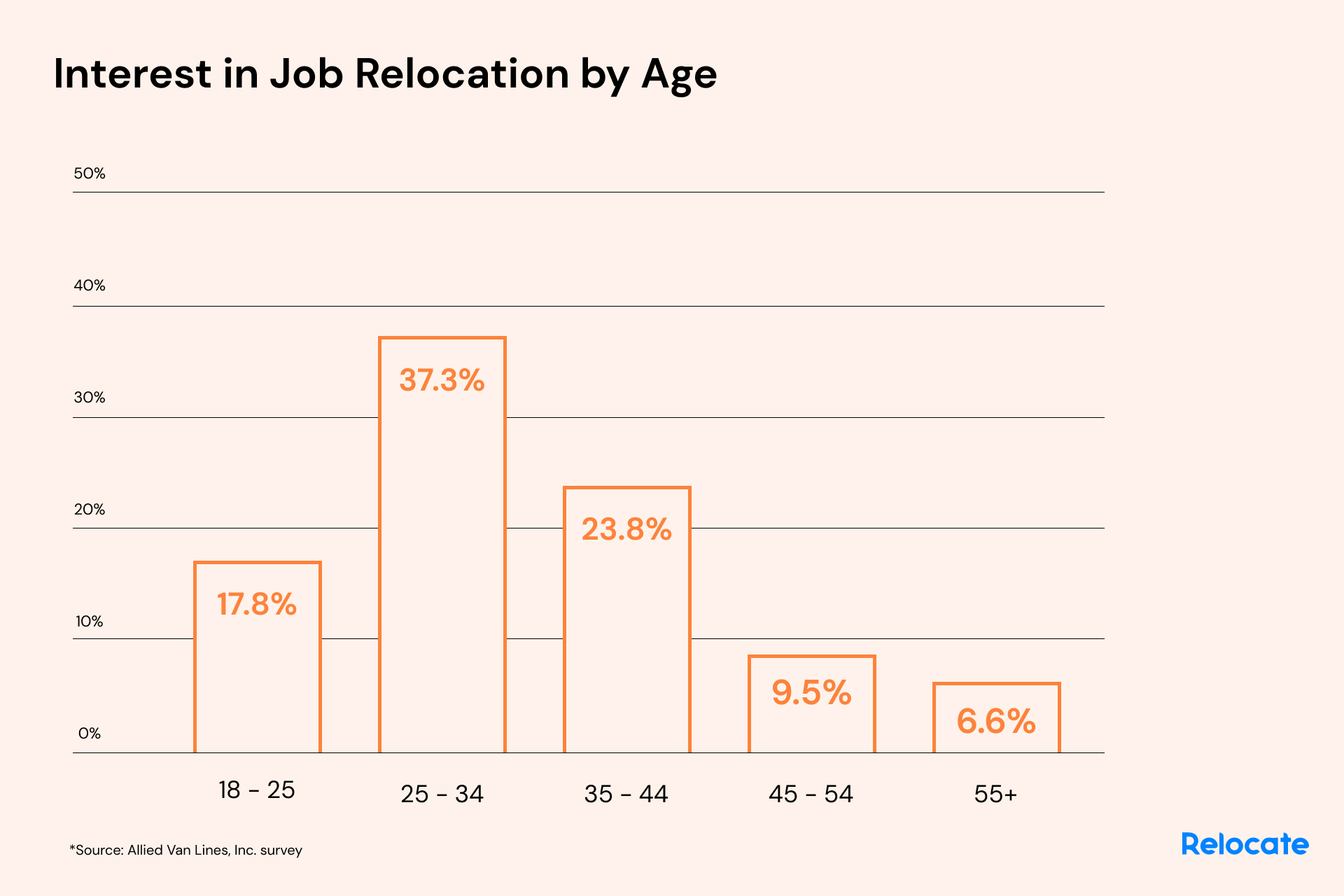
We can help you hire the top global talent by posting your open positions on our site. You can register your company now — it’s free. If you want a quick start, email us at [email protected] to have your company mentioned on the Companies Hiring list. The best way to hire software developers is matching what you offer — relocation — with the top talent seeking that out.
WeAreDevelopers
Works best for: Companies with HQs in Western Europe wanting to hire developers in Europe
WAD for Businesses is another useful option for finding developers open to work. The platform connects companies and IT workers and offers various services to assist in tech recruiting, employer branding, product marketing and brand awareness. With its headquarters in Vienna, this platform focuses on certain Western European countries, specifically Germany, Austria, Switzerland, and the UK.
Some of its practical features include:
- Events and conferences: WeAreDevelopers organises events and meet-ups that bring together developers, recruiters and tech enthusiasts face-to-face.
- Recruiting resources: These include white papers about online recruiting, podcasts, webinars, ebooks, guides, surveys and more.
- Employer branding: Besides helping with hires on a case-by-case basis, WeAreDevelopers helps companies build their “employer brand.”
- Job ads: Since they’re a developer job board, they post your company’s ads and take it from there.
WeAreDevelopers offers various paid plans with different features and pricing options.
Lemon.io
Works best for: Eastern European startups that need to access vetted talent from their home countries
If you work for an early-stage startup that wants to save some costs, Lemon.io might be a good friend to hire a software programmer. The board connects recruiters with vetted offshore developers, especially from Eastern Europe.
Some of its distinctive features are:
- Transparent billing: Lemon.io operates on a transparent billing system. Programmers do not pay any commission. Recruiters pay the developers’ rate plus a commission for the board’s services.
- Flexible hiring: It offers flexible hiring options, including both full-time and part-time positions, so it could work if you need to get contractors rather than employees.
OfferZen
Works best for: South African or Dutch companies that want local, not international, developers
OfferZen is a dev-driven job board based in Cape Town.
The platform works with a “reverse hiring” method. First, it asks developers to create a profile for free so they can connect with a Talent Advisor. Afterward, instead of devs applying for jobs, companies on OfferZen send interview requests to developers, providing upfront information on the role, tech stack, and salary.
Other key features are:
- Transparent recruitment process: Devs can access information about companies, including their profiles and offers.
- Presence in South Africa and Europe: OfferZen has offices in Cape Town, South Africa, and Amsterdam, the Netherlands. While the platform initially focused on the South African market, it has expanded to include opportunities in Europe, especially those in Dutch.
Japan Dev
Works best for: Companies in Japan that want English-speaking devs
Japan Dev is a job platform for roles in Japan that only require English and not Japanese. It’s a good tool for companies that want to start operations in Japan and want to hire international developers who can settle down there. It’s also convenient for companies that need to expand their English-speaking crew. Some key features are:
- Vetted company selection process: They pick the companies that can run ads, and 90% don’t make the cut, so the hiring process could turn out to be too long-winded.
- Specifically for Japan and in English: If you need to hire great software developers quickly and globally, you should consider other platforms that work internationally.
Otta
Works best for: Companies in the UK
Otta is a UK job platform for software developers, designers, or product managers. They work with UK companies that are not specifically developing tech but need up-to-date stacks to stay in business, like the online retailer ASOS. They offer help in hard-to-fill roles to these companies that can’t hire by themselves, maybe because they don’t have tech recruiters on their teams. Some key features are:
- They give relevance to a company’s mission: UK workers who are concerned about their future employer’s vision rely on Otta. If you want to make a strong case for your vision and are looking for UK workers, this platform could help.
- They help with hard-to-fill technical roles: Around half of the hires made on Otta are for expert, leadership or technical roles.
Dice
Works best for: Companies that want to hire US developers
Established in 1994, Dice is a well-known site, mainly present in the United States. Some of its pros are:
- Extensive talent pool: They’ve been around for 30 years and claim they have millions of registered members.
- Targeted search: Dice says they use AI to connect the right professionals to your job ad.
- Social media presence: Dice says they’ll share your postings on their socials.
Dice is heavily marketed in the United States, but recruiters and developers from all parts of the world use it. It’s not a narrowed-down, all-in-one solution by any means. Just like LinkedIn, to mention another giant network, it’s spread too thin.
Remote-focused boards
Let’s now see a few remote work-focused job boards. These boards also try to help recruiters find skilled developers, but the difference is that they market themselves to developers as a work-from-home platform.
X-Team
X-Team operates differently from traditional recruitment platforms. It acts as a facilitator of pre-vetted development teams rather than individual devs. This presents some advantages and considerations for dev recruiters:
- Fast if you need a team: It lets you hire pre-built teams that know how to work together.
- Third-party management: Besides helping you recruit, X-Team manages the team logistics, payroll and administrative tasks.
- Global pool: They claim to reach developers from over 75 countries.
Considerations:
- Limited control: You have less control over individual team member selection than traditional recruitment.
- Hard-to-estimate cost: X-Team’s services come at a premium compared to hiring individual developers. The developer rate for X-Team is between $40 and $50 per hour. That would cost you almost $90,000 a year to hire one of their developers full-time, and if you prefer an in-house dev, then you better put the money on one.
Arc.dev
Arc.dev, sometimes stylised as Arc(), offers recruiters a pool of vetted developers and also comes with an AI tool that allows you to get a shortlist of matched candidates.
Some of its features are:
- Flexible hiring options: Arc() enables you to hire developers freelance, contract-to-hire or full-time.
- Support: They also provide ongoing support during the hiring process. If it’s your first hire,
- AI-powered matching: They use an AI assistant — a chatbot called HireAI — to get you quicker to the right candidate.
Their features look very similar to X-Team, but Arc.dev emphasises AI more strongly because they claim the assistant will help you reach your match rapidly (it’s not clear how it compares to traditional hiring methods). Remember that the site is a relatively new player compared to established platforms, and its user base might be smaller in specific regions or skill sets. Also, Arc.dev is popular among designers, so it could be a great place to look for frontend developers, but not the best to find a Java senior developer.
Devremote
Devremote is a job board for remote workers looking for remote companies, but not necessarily remote-first companies. Among their clients are Match.com (Tinder), Amazon, and HubSpot, which are companies that certainly have offices and in-person meetings. If your company needs to get developers who are specifically looking for remote jobs, Devremote can help you. Some significant features are:
- “Competitive Salary” option: When checking the boards, jobseekers can toggle the “Competitive Salary” option on or off. Postings without a salary are removed when the option is toggled on, so you might be sifted out if you can’t list your salary yet.
- An emphasis on Web3 and blockchain: Many players in the blockchain sector post their jobs on Devremote. It’s not specifically marketed to them. But if you’re a recruiter in the Web3 space and need a great software developer, you should try this site.
Remotive
Remotive is a well-known platform that collects jobs in software development, customer support, marketing or sales. They’re a remote-first platform and emphasise work-from-anywhere (what they call “worldwide”) postings, so if you don’t have a specific location for your new hire, Remotive could help you. Some of their key aspects are:
- Job listing import from ATS: Recruiters can import job listings from their applicant tracking system with a few clicks, including Greenhouse, Lever, Workable, Recruitee, Smartrecruiters, or Recruiterbox.
- Requires no account: Recruiters can manage jobs via a link we’ll email you upon posting. So no need to sign up and recover yet another password.
If you prefer your talent to relocate or to offer a curated jobseeking experience, you should try a niche board. You’ll be competing against thousands of job ads in Remotive.
Other useful options for recruiters
Lastly, here we’ll present some sites that are not precisely job boards but can still be very useful in your search to hire a software developer.
Emergent Staffing
Works best for: Companies seeking dedicated developer teams with specialized technical expertise and hands-on project support
Emergent Staffing is an IT staffing company that specializes in placing vetted software developers with businesses across various industries. Unlike traditional recruitment platforms, Emergent Staffing focuses on understanding your technical requirements and company culture to provide developers who can integrate seamlessly into your existing teams.
Some of its key features are:
- Technical vetting process: All developers go through a rigorous screening process that evaluates both their technical skills and soft skills, ensuring you receive candidates who can contribute from day one.
- Flexible engagement models: Whether you need contract developers for short-term projects, contract-to-hire arrangements, or permanent placements, Emergent Staffing offers flexible hiring options to match your specific needs.
- Ongoing support: Beyond the initial placement, Emergent Staffing provides continued support throughout the engagement, helping resolve any issues and ensuring successful long-term matches.
- Industry specialization: With experience placing developers across multiple sectors, including fintech, healthcare, e-commerce, and enterprise software, they understand the unique technical challenges of different industries.
Turing
Turing, founded by Stanford alumni, is a tech services company that connects businesses with vetted developers. Instead of posting jobs and sifting through applicants, you tell Turing your specific needs, and they match you with pre-vetted developers. In that way, it’s very similar to Honeypot, but the difference is that Turing is based in Silicon Valley, and they connect applicants with US companies.
So, Turing could only be the best fit if your company is based in the US. Also, they seem to capture senior talent only. And unlike traditional recruitment, you might have less control over individual candidate selection. In addition, be prepared for premium pricing.
ScienceSoft
ScienceSoft is a software consulting company that outsources software development and IT services. With offices worldwide, they can source talent from various countries. However, their primary focus is on Eastern Europe and the US.
Their recruitment services lean towards larger, custom projects rather than individual placements. This might not be ideal for filling everyday development roles. You could also combine their recruitment with their services if you’re just starting.
It’s not a way to hire developers, but it is a way to have developers on your team.
The post Best Sites To Hire Great Software Developers first appeared on Relocate.me.
]]>The post Most Affordable European Countries for Expats Who Want to Relocate first appeared on Relocate.me.
]]>Moving to a new country for work brings the thrill of new cultures, experiences, and lifestyles. Yet, the practicalities of such a move — especially the cost of living — play a big role in making a decision. If you are looking for an adventure without breaking the bank, Europe offers several destinations that are affordable and are guaranteed to show you unique and exciting ways of living.>
We are about to review some of the most wallet-friendly European destinations for expats, which include Croatia, Estonia, Spain, Hungary, and Montenegro. Let’s find out why they are the most affordable European countries, especially for people who would like to live and work there, and how they stack up against more expensive counterparts.
Cheapest country to live in Europe: What is the cheapest country to live in in Europe as an expat?
The cheapest country to live in in Europe in 2025, for expats, is probably Hungary, but expats should nevertheless look at Croatia. It’s true that Budapest is very affordable, even more than big Croatian cities. But Croatia isn’t that far off, and expats can expect to pay around €670 for an apartment in Zagreb, which is most likely a third of what you could pay in London. There’s a main reason why we put Croatia at the top of the list, and it’s zero taxes with a digital nomad visa. In Croatia, if you have a digital nomad visa, you don’t have to pay any taxes to the government. Because you don’t have to worry about taxes for a year, which is what the visa lasts, you can focus on your work and put all of your extra money back into your business.
Croatia is still pretty cheap compared to other European countries. If you work hard and keep your costs low, you can save a lot of money while still living in Europe. The Global Move ranked the Croatian digital nomad visa as one of the most interesting in 2025, so expats should be looking at it.
If you’re not an expat and you just want to know which countries have a very low cost of living in Europe in 2025, you should probably set your eyes on Turkey or North Macedonia. Living a comfortable life in Zurich, which is one of the world’s most expensive cities, could cost you as much as 170% more than living the same way in Istanbul.
The most affordable European countries in 2025 for expats
We’ll now guide you through some of the continent’s most cost-effective destinations to help you gauge the affordability of each location. These are the most affordable countries in 2025 for expats.
Croatia 
Croatia’s quickly becoming a go-to spot for expats who want to live in a country with an interesting cultural heritage, beautiful beaches, and a laid-back style of living. In cities like Zagreb and Split, you won’t have a problem getting by with English, which makes it easier to find a place to live, build connections, and settle in. Croatia’s healthcare system is known for being both high-quality and accessible, which is great news for families thinking about moving there. Such a reliable healthcare setup is comforting for anyone relocating, and the option to choose international health insurance plans adds an extra layer of security and choice.
Plus, being smack in the middle of Europe means weekend getaways to other countries are easy. For example, a flight from Zagreb to Paris will only set you back around €50, and takes only 2 hours. Now, let’s talk numbers, since that’s where Croatia really shines:
- Rent in the city centre: You’re looking at about €550 a month.
- A meal out: About €10 will get you a decent feed.
- Coffee fix: Just €2.
When you stack these costs up against other European cities, Croatia’s value is crystal clear. Renting a spot in Zagreb (€670) is way cheaper than shelling out €2,500 for a place in London or even €1,400 in Paris. And, with a cost of living index sitting at 31.5, Croatia is way more wallet-friendly compared to places like Switzerland at 84.0, Ireland at 57.4, or even the Netherlands at 50.2. Croatia is also a practical option for people aiming for a better lifestyle in Europe. Its high appeal is evident, with Croatia having the second-highest emigration rate in the EU.
Living in Croatia, especially for remote workers, offers a blend of economic and lifestyle benefits that are hard to ignore. With the Croatian Digital Nomad visa, remote workers who are employed by companies outside Croatia enjoy an exemption from paying income tax for a year. And, the warmer climate, proximity to beautiful beaches, and the affordability of life here add to its allure. On average, life in Zagreb is about 40% cheaper than in London, excluding rent, which means significant savings for expats. This cost advantage, combined with a median annual salary for remote software developers of around €48,000, allows for a great quality of life.
Estonia
Estonia, one of the most affordable European countries, is on the map as a prime destination for expats craving a mix of entrepreneurship and history, without the financial pinch often felt in Western Europe. Its capital, Tallinn, meshes cobblestone charm with a digital-forward attitude, and is the centre of an emerging food scene. English is widely spoken, especially in tech circles. Plus, Estonia’s compact size means you’re never too far from either a digital hub or a tranquil forest retreat.
Now, let’s dive into the specifics that make Estonia so appealing:
- Average rent in city centre: Expect to pay around €600 for a cozy spot.
- Dining out: A hearty meal in a local eatery will set you back about €11.
- Your morning coffee: Only €3 to kick-start your day.
When comparing Estonia’s living conditions to other destinations, the contrast becomes clear. For example, living in Tallinn comes with significantly lower expenses than in Helsinki (€975) or Paris (€1,400), where rents are approximately 16.56% and 67.71% higher, respectively. Moreover, while the average salary for software developers in Estonia may seem modest at around €27,000 — considerably lower than Germany’s €52,000 — the cost of living remains low, with estimated monthly costs for a single person at €840 without rent. This means that if you are a remote worker earning a Western European salary in Estonia, you can live comfortably due to the lower cost of living.
Moreover, due to its advanced digital infrastructure and straightforward visa processes, such as the Estonia Digital Nomad Visa and the E-Residency program, getting into the country and starting a business is pretty straightforward. And, its reputation as the birthplace of Skype highlights its status as one of Europe’s most digitally forward nations. The capital, Tallinn, and Tartu, are at the heart of a growing expat community, thanks to initiatives like the Settle in Estonia program, which offers free adaptation and language courses for newcomers and their families.
Spain 
Spain really does have everything: beautiful beaches, fun festivals, and that famously easygoing way of life. You can move to Spain and work in Madrid, Barcelona, or the bigger cities of the Basque Country like San Sebastián or Bilbao. But the country’s got tranquil villages and stunning coastlines that offer something for everyone. The country is excellently connected thanks to a relatively recent development in infrastructure.
You can lead a comfortable life across Spain without facing the high costs common in other parts of Western Europe, which is why it is also a top holiday destination for Western Europeans and UK residents.
Let’s break down what makes Spain so wallet-friendly:
- Average rent in city centres: Around €930.
- Grabbing a meal: About €12 can get you a great meal at a restaurant.
- Coffee time: Just €2 for your coffee fix.
Choosing Spain as your home means you’ll be able to afford a great lifestyle in one of the most affordable European countries for expats. As a comparison, the combined monthly costs for a single person, including living expenses and rent, tally up to €2,300 in the Netherlands. However, Spain offers a much lighter financial load with a total of €1,630 per month for similar expenses. This means living in Spain is about 29.3% cheaper and you get the beauty, the culture, and the lifestyle for a lot less than some other Western European countries.
Spain is a top choice for expats, with its appealing lifestyle drawing about 6 million expats to cities such as Barcelona, Madrid, Valencia, Malaga, and Seville. The Digital Nomad Visa is perfect for remote workers, allowing them to live and work in Spain, bring family along, and travel around the Schengen Zone. There are multiple paths to EU residency, and many large international companies are hiring, making Spain an excellent spot for both lifestyle and career opportunities.
Hungary 
Hungary is Europe’s underrated star. Budapest, the capital, is a typical tourist destination due to its architecture and nightlife. The country has more to offer, though. Go and check out pictures of Lake Balaton, for example. There are also lots of vineyards and festivals in the countryside that show off the way of life there.
Let’s look at the numbers that make Hungary so appealing:
- Average city-centre rent: A steal at €420.
- Eating out: A tasty meal for just €9.
- Coffee break: Only €2 for your caffeine hit.
With a cost of living index of 28.2 on a scale that goes to 100, Hungary is the cheapest European country to live in, at least on our list, and one of the cheapest on the whole continent. You’re not going to find yourself stressing over rent like you might in Berlin, where you’d be forking out around €1,300. Based on just the cost of renting a city-center flat, living in Budapest, one would save approximately 68.2% compared to the rent in Berlin. This means you’ve got more cash to splash on enjoying everything Hungary has to offer, from delicious food to exploring UNESCO World Heritage sites.
With a Western EU salary, you can afford experiences like wine tasting in Eger or relaxing in the Széchenyi Baths — luxuries that might be too expensive elsewhere. Living in Hungary allows you to enjoy life to a high standard while saving money.
Montenegro 
Montenegro is a country that packs a big punch when it comes to natural beauty. Picture yourself waking up to views of the majestic Adriatic Sea or planning weekend hikes in its rugged mountains. Who can resist the charm of the Bay of Kotor or the sandy beaches of Budva?
Living in Montenegro doesn’t ask you to break the bank:
- City-center apartment rent: Just €600.
- Dining out: A tasty meal for about €9.
- Morning coffee: Only €2.
The low cost of living in Montenegro is most obvious when you compare it to pricier European destinations. For example, paying rent in a city like Montenegro’s capital, Podgorica (€530), is significantly cheaper than navigating the costs of life in cities such as Paris (€1,400) or Amsterdam (€1,900). While salaries in Montenegro may not top the charts, remote developers can expect a respectable yearly income of around €45,000.
Living in Montenegro is great for remote professionals or those with EU citizenship, as local English-speaking jobs are scarce. It’s a place where life’s cheaper, from housing to dining, allowing you to save or spend on enjoying the outdoors. While English isn’t common, you’ll manage, especially in expat-friendly spots. Montenegro’s perfect if you work remotely and crave adventure without the high costs of more popular expat destinations.
Make your move with Relocate.me
Getting to the most affordable European countries might be (ironically) either expensive or difficult. That’s why the best way to plan on your move is with a job. On Relocate.me, you can find a tech job from a company that supports international relocation, including some of the cheapest countries to live in Europe. There are new job opportunities every day in Europe, the US, and the UK, plus many of the countries mentioned above.
Relocate.me can also connect you with immigration experts who can help you take your first steps. We can put you in touch with someone who has done this many times before if you didn’t understand the steps from work visa to passport or just need help putting together the right paperwork.
You can also sign up for The Global Move, our newsletter with curated tech jobs and content for people who are looking to move and work in a new country.
FAQs
What is the cheapest country to live in in Europe in 2025 if you’re an expat?
The cheapest country to live in in Europe in 2025 if you’re an expat is Hungary, but you should pay attention to Croatia. Türkiye is still cheaper than both, but visas in Croatia and Hungary beat Türkiye.
What makes Croatia so good for expats?
Croatia has a very affordable cost of living and an excellent Digital Nomad visa: you’ll pay zero taxes for a full year. That’s almost unmatched in Europe.
What are other cheap countries in Europe for expats?
Some other cheap countries that have good entryways for expats in Europe include Montenegro, Spain, or Estonia. Many of these countries have very clear paths to citizenship, which could mean you end up getting a European Union passport, which permits you to work in Paris, Munich, or Stockholm alike.
The post Most Affordable European Countries for Expats Who Want to Relocate first appeared on Relocate.me.
]]>The post A Guide to International Recruiting And Best Practices first appeared on Relocate.me.
]]>Over the last six years, more than half of global organisations have run into skill shortages that have slowed them down. The skill shortage dropped a bit in 2020, mostly because the COVID-19 pandemic made hiring tough. But in 2023, 54% of organisations are still struggling to find the tech skills they need. This shows how important it is for recruiters to look further than just local hiring to find the talent they need.
Hiring internationally means companies can reach out to more skilled people from all over the world. This way, they can either find top-notch talent or skilled workers who cost less, thanks to the different economies around the globe. It gives everyone, no matter where they are, a fair chance at landing a job. It also means companies can find the skills they need from other places if they’re not available locally. This approach helps businesses get the best team together, possibly at a lower cost, by broadening their search beyond their own backyard.
With remote work on the rise — evidenced by a tripling of remote job postings since 2020 and 74% of employees happier working this way — the opportunity and necessity to tap into the global talent pool have never been clearer. As 97% of workers express a preference for remote work, the move towards global recruitment strategies is essential for forward-thinking organisations aiming to thrive.
This is your guide to international recruitment, where we outline how to effectively identify, attract, and onboard global talent. We’ll also provide actionable insights and best practices for hiring internationally, ensuring your organisation leverages the full potential of the global workforce.
What is international recruiting?
International recruiting is when HR teams look for, attract, interview, choose, and bring on board talent from around the world. It broadens the search for talent to include candidates from outside local or national limits, offering access to a varied mix of skills and backgrounds. This process uses technology and worldwide networks to find potential hires and see if they’re a good match for the job and company culture. It also covers getting them settled into the company, no matter where they’re from.
This global approach to hiring means dealing with more than just finding the right people. Compared to local hiring, it involves navigating different challenges like understanding international payroll systems, adapting onboarding processes for remote workers, and managing taxes and legal requirements across various countries.
By tackling these differences, companies can diversify their teams, spark innovation, and stay ahead in the international market.
Hiring internationally brings clear advantages:
- Lower costs for labour, thanks to different economic situations in other countries.
- Fewer expenses related to things like visas, moving, and office space because you can hire remotely.
- The chance to find the very best talent from all over the world, without being limited to local candidates.
- Easier entry into international markets if the company is expanding, with team members who understand those areas well.
- Access to a much bigger pool of potential hires.
Your guide to the international recruitment process
Learn to hire talent from around the world. Opening up to candidates globally can bring in top talent. Here are the steps to get you started.
Step 1: Identify your team’s needs
Start by looking at your team and upcoming work to see where you’re short on skills or could use some extra help. Focus on roles that are tough to fill or that can work on their own, since these are good to hire for internationally. Jobs in areas like marketing, advertising, or software development often fit this bill because they can be done independently.
Think about the jobs you’re hiring for. If the job can be done from anywhere, it’s perfect for hiring someone from another country. But if the job needs lots of teamwork or is super important, it’s better to find someone who’s in a time zone close to yours.
Here are some practical steps to take:
- Consider location and time zones: After spotting the skill gaps, decide which geographical areas or time zones you should target for these roles. The decision could depend on whether the job requires close teamwork or if you’re aiming for cost-effective solutions.
- Choose between contractor or full-time: Based on how critical the role is and the duration of the need, decide whether to look for contractors for short-term tasks or full-time employees for ongoing work. This will guide your search and the offers you make.
Step 2: Develop a recruitment strategy
Adding to the importance of a solid strategy, a CareerBuilder survey found that 74% of employers admit to making a wrong hire, costing anywhere from 30% to 150% of the employee’s first-year salary.
Here’s a blueprint for building a solid strategy:
- Find your preferred payroll solution: Use platforms like Remote.com or Deel.com for handling international payroll to make sure you’re on top of taxes and legal stuff without the headache.
- Get worker classification guidance: Check out Boundlesshq.com to get your team’s job roles right according to local laws, avoiding any legal trouble across borders.
- Find tools for effective onboarding: Try platforms like Personio for a smoother start for your remote hires. It helps with all the paperwork and gets them feeling like they are part of the team faster.
- Think about time zone coordination: Use scheduling tools like World Time Buddy or Calendly to plan meetings that work for everyone, no matter where they are. It helps keep everyone in sync and working together smoothly.
- Evaluate each role’s impact: Take a close look at how every position helps achieve your company’s aims.
- Conduct market research: Dive into the availability of the skills you’re after on a global scale, pinpointing regions rich in the talent you need.
- Plan strategically: Decide on the most effective channels and approaches for attracting candidates for each specific role, whether through specialised job platforms, professional networks, or recruitment agencies.
- Budget considerations: Think about your hiring budget, remembering the costs of international hiring, such as relocation support or remote setup. Also, consider how much you’re willing to spend on hiring senior roles or managers, as these positions might require a larger investment.
Step 3: Write engaging job descriptions
Job descriptions are often the first glimpse potential candidates get of your company. It’s crucial to be clear, welcoming, and true to what your company is about. A good job description goes beyond listing what the job involves; it also highlights your company culture, the perks of joining your team, location preferences and job type.
Remember, the way you present this information matters a lot — 52% of job seekers from an Indeed survey said the quality of a job description (think spelling, grammar, clarity about the role, and how it’s formatted) plays a big part in their decision to apply.
Here’s how to make your job descriptions stand out:
- Clarify the role’s impact: Clearly explain how the role contributes to the company’s goals and success.
- Detail the requirements: Include necessary qualifications, language abilities, and any specific certifications required for the role.
- Showcase company culture: Give insights into the values and environment of your company to attract candidates who will fit in with your culture.
- Outline benefits: Talk about the salary range, benefits, and unique perks your company offers, like flexible working arrangements, office setup funds, holidays, international office sites or opportunities for growth and learning.
How to Write Job Descriptions That Attract Tech Talent →
Step 4: Promote the vacancy
To draw in a wide and varied group of applicants, mix up your recruitment methods by combining both traditional and online strategies. This means making the most of your company’s web presence, tapping into global job platforms, and using sites tailored for international hiring.
You’ll find some of the most popular sites among jobseekers here.
Here’s how to broaden your search:
- Company website: Keep the careers section fresh and easy to find.
- Global and niche job boards: Post your openings on big sites like LinkedIn, Indeed, AngelList for startup jobs, Glassdoor, and local startup boards, as well as those specific to your industry.
- Specialised platforms: For tech positions, Relocate.me and similar sites cater to those specifically looking for international work in various sectors.
- Social media campaigns: Use LinkedIn and other platforms to spread the word about your openings, reaching people you might not find through traditional means.
- Employee referral programs: Get your team involved in the search by asking them to recommend people they know, offering bonuses for hires that work out.
- Recruitment help: Team up with agencies or a freelance recruiter — focused on international hiring — for their pools of candidates and specialised knowledge.
Step 5: Review applications
When sifting through applications from around the world, remember that resumes might look different based on each country’s standards. What’s important is to focus on what the resume tells you about the candidate’s skills, experiences, and what they’ve achieved. Tools that standardise resumes — such as Pinpoint, Manatal and Freshteam — can be a big help, making it easier to compare candidates fairly.
Here’s what you can do to improve this process:
- Create a checklist: Put together a list of the important skills and qualifications for the job. This makes sure you’re judging all candidates by the same standards.
- Understand cultural differences: Give your HR team training on the various ways resumes might be presented from country to country. This helps in recognising valuable skills that might not be immediately obvious.
- Check language skills: If the job needs specific language abilities, think about adding language tests to your screening. This ensures candidates can meet the communication requirements of the role.
Step 6: Preliminary screening and interviewing
Adjusting your interview approach for candidates from different countries is essential to respect cultural and legal differences. It’s vital to understand which questions might be inappropriate or even illegal based on a candidate’s local laws. Incorporating video interviews can add a personal touch and help overcome the barrier of distance.
Also, be mindful of time zone differences to schedule these sessions at a mutually convenient time. According to the Talent Trends 2023 Report, flexibility ranks as the second most important motivator for job seekers considering new opportunities.
For hiring from abroad, try to keep the interview process quick, wrapping it up in about a week if possible. This makes sure you respect the candidate’s time and keep things moving on your end. Aim for a smooth and fast interview schedule that fits the quick pace of hiring internationally, helping you land top talent quickly.
Here’s how to refine your approach:
- Stay legally informed: Get to grips with the employment laws that apply in the candidate’s country to keep your interviews on the right side of the law.
- Be flexible with times: Schedule interviews at times that work across time zones, showing respect for the candidate’s availability.
Step 7: Negotiate the salary and compensation package
Crafting the right compensation package is key to attracting international talent. Researching standard salaries, benefits, and legal requirements is essential.
Also, consider the cost of living at the candidate’s location to make your offer appealing. According to Gartner, nearly 90% of candidates have dropped out of the hiring process due to mismatches in what they value, such as pay, benefits, work-hour flexibility, career development, team diversity, and management style.
Here are some steps to take:
- Understand market rates: Research typical compensation for similar roles in the candidate’s region.
- Consult legal advice: Ensure your offer meets legal standards for salary, benefits, and taxation.
- Broaden the offer: Include valued benefits like health insurance, retirement plans, and relocation support.
- Negotiate creatively: If salary adjustments are tight, consider enhancing the package with higher learning and development budgets, remote office setup contributions, or additional vacation days to meet the candidate’s expectations.
- Tailor the package: Adapt the offer to the candidate’s specific needs and career stage, making it personally appealing.
Step 8: Extend the job offer
When it’s time to offer the job to an international candidate, your offer letter needs to cover everything. It should be clear and straight to the point, so the candidate knows exactly what you’re offering, including help with moving and what they need to do next. This clear communication sets up a relationship based on trust and openness right from the start.
Here’s what to include:
- Spell out the details: Make sure the offer letter includes the role, pay, perks, working hours, and any other parts of the compensation package.
- Confirm relocation help: Finalise the support you’re offering for relocation – if the candidate is moving for the opportunity, as opposed to remote work — like covering moving costs or help with finding a place to live. Describe how to get any required visas or work permits, and how you’ll support them in this process.
Step 9: Finalise the hire
Finalising the hiring of an international candidate means ticking off a few important boxes, particularly when it comes to the nitty-gritty of legal stuff like visas and permits. Making sure you’ve got all the paperwork sorted and that everyone’s clear on what’s expected can make everything go a lot smoother and keep any surprises to a minimum.
Here’s how to nail it:
- Sort out the legal bits: Work with legal pros to make sure you’ve got all the work authorisation documents you need.
- Stay in touch: Keep the candidate in the loop about where things stand with their application and what happens next.
- Have a contingency plan: Be ready with a plan B in case you hit any snags with visas or other paperwork hitches.
Step 10: Onboard new hires
According to Paychex, 36% of remote workers find the onboarding process confusing, compared to 32% of those working on-site. Plus, according to Gartner, there’s a significant impact on long-term retention: 77% of new hires who were happy with their onboarding experience said they could see themselves staying with the company for a long time, versus only 29% of those who weren’t satisfied with onboarding. This highlights the need for a clear, welcoming, and effective onboarding process for all new hires.
Here are some simple tips to improve onboarding:
- Start early: Kick off onboarding before their first day, sharing useful info and resources about your company and team.
- Email all the tech and logins they’ll need access too.
- Find a buddy: Match the new hire with a buddy for guidance, answers, and company navigation in their early days.
- Keep in touch: Have regular check-ins for support, feedback, and to tackle any problems quickly.
- Meet the team virtually: Arrange online meet-ups with the team and important people in the company to help them feel welcomed.
International hiring best practices to incorporate into your strategy
When hiring globally, it’s all about getting the details right. Remember, 72% of candidates say a smooth interview process can sway their decision to take a job. Here’s how to streamline your approach:
1. Tailor your strategies to different markets
To really get the best global talent, you need to tweak your strategy for each market. Begin by writing job descriptions that hit home locally — maybe even translate them to the local language to widen your reach. Figure out which job boards and platforms folks in each area use most to make sure your job ads are seen by the right people. This practical approach takes into account the different vibes of global markets, making your recruitment drive more on point.
2. Enhance the candidate’s experience
Making sure candidates have a good experience is key to drawing in the best people. Being flexible with how you do interviews — like using video calls or working with local agencies for face-to-face chats — helps include people from all over, no matter their time zone. Also, making the application process straightforward knocks down hurdles, so it’s simpler for folks to show they’re interested in joining your team.
3. Build a strong global employer brand
Building a strong employer brand worldwide means being clear about what your company stands for, its culture, and why it’s great to work there. Getting your current employees to talk about their positive experiences adds realness to your brand. Also, making good use of social media can help spread the word, drawing in potential hires by highlighting what makes your company different and the exciting chances it offers.
4. Explore emerging markets for talent
Looking into emerging markets can reveal a wealth of hidden talent. Searching in these places lets you find people with special skills and viewpoints that can really benefit your company. This strategy does more than just add variety to your team; it also shows that your company is open-minded and welcoming to all.
5. Prioritise skills over degrees
Putting more emphasis on what people can actually do and their real-world experience — instead of just what degrees they have — lets you look at a wider range of applicants. This approach appreciates the different paths people take in life, understanding that these varied journeys can bring valuable insights and fresh ideas to your team. It’s a smart way to find those standout talents that might otherwise be overlooked.
6. Leverage technology in recruitment
Using the latest HR tech can make hiring faster and smarter. With tools like AI for sorting resumes and software that schedules interviews automatically, every step of hiring gets easier for both the recruitment team and the applicants. This doesn’t just cut down on the time it takes; it also helps you look more widely and fairly for talent all over the world.
7. Be aware of employment laws
Getting a handle on the employment laws of different countries is key to smooth international hiring. Making sure you’re in line with local rules about things like taxes and contracts keeps you out of legal hot water. It’s a good idea to talk to legal professionals who know the ins and outs of these laws. They can help make sure your hiring abroad is not only successful but also follows all the rules.
8. Outsource to specialised agencies
Working with agencies focused on international hiring can be a game-changer. They know the local scene inside out, from legal must-dos to who’s who in the talent pool. This kind of collaboration can make hiring a breeze, helping you find the right people while making sure everything’s above board with local work laws.
Start hiring internationally today
The people you hire really shape your business’s success. Going global with your hiring strategy can help you find the talent you need, thanks to technology and more options for remote work.
Actually, 66% of recruitment experts think going global is a great way to snag top talent, and 80% of the biggest-earning agencies are already hiring all over the world.
If you’re looking to hire from around the globe and relocate employees, check out Relocate.me for help. Post your tech job on the Relocate.me board today.
The post A Guide to International Recruiting And Best Practices first appeared on Relocate.me.
]]>The post Where Do Software Engineers Get Paid the Most in 2025? first appeared on Relocate.me.
]]>In 2025, the country where software engineers get paid the most is the United States, above $133,080 a year, or roughly $11k per month. Salaries in Silicon Valley reach $168,000 per year, those in New York City are around $146,000, and those in Seattle are around $136,000. Backend engineers surveyed by Stack Overflow admitted they’re earning $175,000 a year in 2025, which is a notable increase compared to the $160,000 a year they had estimated in 2023.
But the US is not the only place you can make money as a software engineer. In this article, we’ll introduce you to the top 10 countries where software engineers are earning the most.
Continuing with salaries, the figures mentioned below are not entry-level or even junior salaries. These averages are more comparable to mid-senior experience.
Let’s dive in and look at the industry’s average earnings, considering factors such as job position, work experience and programming language proficiency. We’ve consulted reputable sources to put together the most reliable figures for you. The figures reported here are gross annual salaries (before tax). Here, you can find net salary calculators for different countries to estimate your take-home pay. This is a simplified version of the list:
| Country | Average Software Engineer Salary |
| United States | $133,080 or €113,000 |
| Switzerland | €112,500 |
| Israel | €70,000 |
| Australia | €67,000 |
| Denmark | €66,000 |
| Canada | €62,000 |
| Germany | €63,000 |
| United Kingdom | €57,885 |
| Norway | €51,500 |
| Sweden | €44,000 |
1. United States
Software engineers in the US earn a median annual salary of $133,080. This is an updated figure from August 2025.
The United States is well known for offering the highest-paying IT salaries in the world. And it’s not just in the Bay Area. Companies in Seattle, New York, Austin, Chicago, and Dallas also offer some of the highest-paying salaries in the world, comparable with the likes of London and Zurich.
Although the US is still the preferred destination for software engineers around the world, there have been some major changes in the market that are worth noting. Most notably, mass layoffs from the tech sector (including FAANG), lower salaries (even for senior developers), and the already-established hustle culture should make software engineers think twice before heading to the US.
You know the saying… “Americans live to work, Europeans work to live.” Salaries are outstanding in the US, but it comes at a cost. Work-life balance in the US falls behind compared to Europe. In the US, startup workers and even billionaire owners rarely put in 9-5 hours like it could happen in Stockholm or Copenhagen. Also, job security in tech seems to be at a weak point with the wave of layoffs. Still, the US economy keeps adding more and more jobs, so being laid off is not a dead end.
Work-Life Balance Comparison: USA vs EU →
Now, if you think money can compensate for long working hours and dwindling job security, the US is a good destination. Some salaries are even higher than reported here. For example, the Stack Overflow survey of 2023 demonstrated that being a backend developer in the US is one of the best-paying jobs in tech, with salaries above $175,000 per year (an almost 10% increase compared to the $160,000 of the 2023 report.) But these salaries are only for a tiny percentile of software developers. Some senior developers are reporting lower salaries compared to the post-pandemic boom, with some taking a 3% or 9% cut year-on-year, and that doesn’t account for inflation.
The cities with the best salaries for software engineers are San Francisco and Santa Clara, CA, both part of Silicon Valley. Those salaries can reach $168,000 per year, which is well above New York City, which has an average salary of $146,000. Seattle comes in right after with $136,000. Austin, Chicago, the Dallas–Fort Worth metropolitan region and Houston come right behind, with salaries ranging from $130,000 to $95,000. Silicon Valley pays the best, but there’s a whole world out there (in the US). It’s still one of the best countries for software engineers.
| Role | Average Yearly Salary in |
| Median Software Engineering | $133,080 |
| Backend Dev | $175,000 |
| Frontend Dev | $113,249 |
| Full Stack Dev | $123,809 |
| Java Dev | $92,565 |
| Python Dev | $123,663 |
2. Switzerland
Software engineers in Switzerland earn around €112,500 a year, or CHF105,000 in October 2025.
Where do software engineers make the most money? Switzerland is a sleeper when it comes to opportunities for software engineers. It’s well-regarded for its very high standard of living, for its natural beauty, for being one of the safest countries in the world, and for paying excellent salaries that make up for the very high cost of living (a chicken sandwich in Geneva might cost 80% more than in Dallas). And Geneva is not their most expensive hub — that’s Zurich, dubbed the most expensive city in the world.
But even if it’s world-renowned for all these reasons, it’s not exactly a typical software engineering location. Switzerland lures skilled software engineers with high salaries (easily exceeding €110,000!) while keeping an attractive, and ultimately European, work-life balance. The demand for workers is high, but competition can be gruff, so much that juniors should not consider Switzerland. This country is only for experienced professionals. It’s expensive and immigration is very difficult unless your skills are in demand, and unless you can prove your experience. Only come to Switzerland if you have a strong resume to stand by you. On the upside, many companies prioritise a 40-hour workweek, and over half of IT professionals report achieving a good balance.
Also, keep in mind, that the high wages come with a high cost of living, so factor that in while evaluating the option. Renting a studio apartment in Zurich’s city centre can cost up to 50% more than renting one in Dallas. But purchasing power in the Swiss city is still around 5% stronger than in Texas, which tells how well-balanced the Swiss cost of living is with their uncommonly high standard of living.
| Role | Average Yearly Salary in |
| Average Software Engineering | €112,500 |
| Backend Dev | €115,659 |
| Frontend Dev | €85,135 |
| Full Stack Dev | €105.335 |
| Java Dev | €94,770 |
| Python Dev | €105,390 |
3. Israel 
Software engineers in Israel earn almost €70,000 a year in 2025. It’s one of the highest salaries for software engineers in the world.
Israel relies on the tech sector. The high-tech sector contributes 18% to local GDP, making it their largest industry by economic output. Tech comprises half of the country’s exports, which means the sector attracts foreign currency like no other — and this could explain the good salaries. About one in seven of all employees work in the tech sector and in tech jobs in other sectors. This concentration is not so far from Silicon Valley’s (where one in four workers are in tech).
The startup scene in Israel is worth $120 billion, according to reports. Tel Aviv is the seventh-largest startup ecosystem in the world and has the highest number of startups per person in any country, with almost 3,000 in Tel Aviv alone, of which around 30 are already unicorns. The government actively props up the scene with stimulus packages and pro-tech policies. It’s also a cybersecurity hub, big data, an AI hub. Waze, for example, was founded almost 20 years ago near Tel Aviv, and represented one of the first widespread cases of AI and big data for end users.
Since there is so much cash from investors and so much cash brought on by exports, software engineers can expect some of the best salaries in the world. It’s not only startup-driven, though. Israel hosts R&D centres for large tech companies like Amazon, Apple, Cisco, SAP or Meta.
In Israel, work-life balance can be a double-edged sword. The fast-paced, startup-driven business environment often encourages longer hours and dedication. The “hustle culture” is widespread and many engineers, notably from the cybersecurity sector in Tel Aviv, report that burnout is very common.
| Role | Average Yearly Salary in |
| Software Engineering | €69,579 |
| Backend Dev | €83,332 |
| Frontend Dev | €40,163 |
| Full Stack Dev | €52,565 |
| Java Dev | €55,040 |
| Python Dev | €61,727 |
4. Australia 
Software engineers in Australia earn around €67,000 a year ($120,000 AUD in 2025).
Australia is a very sought-for location because it has plenty of cities with good weather, a high standard of living, and salaries for software engineers that are even above some German wages. Even if investment in tech startups in Australia fell in 2023, there were almost 500 deals, including Employment Hero’s quarter-billion-dollar funding round. This cash influx results in more opportunities for software workers, who can also rely on well-established tech companies such as Canva, Atlassian, or Procreate to seek jobs.
Australia has traditionally welcomed qualified workers from abroad to fill the talent gaps, and software engineers are just as in demand. In fact, more Europeans are moving to Australia for tech work than the other way around. Still, it’s not only Europeans who’re choosing to settle Down Under. According to industry reports, around a third of tech workers speak a language other than English, making it the most culturally diverse sector in the country.
In Australia, and in contrast to the US, tech jobs are also more secure than other occupations. The rate of people who no longer work after eight years was around 5% lower in tech than in other Australian high-paying industries. This makes it one of the best countries for software engineers.
Even though almost half the workers in the Australian tech industry don’t have a university degree, immigrating engineers who request a visa are expected to have one and to pass an English exam and score a certain number of points. You can earn points by many means, but the most important is experience.
Australia has very strict immigration policies, but a company sponsorship could help you settle down there. For example, a software engineer with 2+ years experience can apply for Australia’s Skilled Independent visa (Subclass 189) but may need higher points (3-8+ years experience) for a stronger application. So consider internal company transfer for temporary residency followed by permanent residency as a pathway to staying in Australia.
However, like many attractive hubs, the cost of living in cities like Melbourne and Sydney is extremely high — even higher than in certain European countries. Despite what Mercer claims, the cost of living in Australia has skyrocketed to 2-3x what it was in 2019, depending on the city.
| Role | Average Yearly Salary in |
| Software Engineering | €67,260 |
| Backend Dev | €72,354 |
| Frontend Dev | €69,173 |
| Full Stack Dev | €72,286 |
| Java Dev | €70,958 |
| Python Dev | €84,296 |
5. Denmark
Software engineers in Denmark earn around €66,000 per year.
Denmark’s recent hits have been in pharma or the movies, but the tech industry in Denmark also enjoys steady growth, with opportunities in major cities like Copenhagen and Aarhus taking advantage of recent graduates. Sources estimated that Danish software companies would drive an excess revenue of almost $4 billion in 2024.
There are plenty of sectors in the tech industry that software engineers can consider. Tech giants like IBM, Microsoft, and SAP have set up innovation and development hubs in Denmark. Some tech “newcomers,” like Zendesk or Trustpilot, are some successful Danish tech companies that specialise in business solution development. In fact, around 7% of the tech investment deals that end up being unicorns come from Nordic countries.
When seeking employment, software engineers can look into other Danish tech sectors that are not exactly IT. Cleantech is also a growing tech sector in Denmark. Environment-related technologies accounted for a quarter of Danish patents in 2018. It’s also the highest share in the OECD. The Danes are known for inventing tech stuff, as they came up with C++ and C#
Software engineers are in demand in Denmark, and the government is making it easier for international talent to get work permits (they’ve approved lower salary requirements for foreigners applying for work) and even own businesses (Startup Denmark program) to get a residency permit.
While salaries may not reach the heights of some other countries, they remain competitive and are coupled with generous benefits, including ample paid holidays and a standard 37-hour workweek. Denmark has one of the world’s best work-life balances, with only 1% of workers putting in long hours and a standard 25 vacation days.
However, consider that the cost of living in Denmark is high. If you land a job in Copenhagen, you could even consider living in the quiet university town of Lund, Sweden, and crossing the Øresund Strait for work a couple of times a week.
| Role | Average Yearly Salary in |
| Software Engineering | €66,603 |
| Backend Dev | €69,802 |
| Frontend Dev | €53,231 |
| Full Stack Dev | €60,902 |
| Java Dev | €61,706 |
| Python Dev | €74,987 |
6. Canada 
In Canada, software engineers earn around $73,000 USD annually. That’s approximately €62,000.
The Canadian government actively supports the tech sector through grants or tax incentives. The Deputy Prime Minister recently announced a $20 billion fund to help develop net-zero and clean tech. Also, many provinces have their own programs. Besides clean tech, the country’s focus on AI, healthcare tech, and cybersecurity means you’ll have plenty of paths to find your niche.
Canada has advantages like few other countries, both for software engineers and for any worker. Some cities are cheaper than their counterparts across the US border. According to Numbeo, Toronto prices are estimated to be around 5% cheaper than Chicago (still, keep in mind that Chicago has greater purchasing power). And Vancouver continually gets picked as North America’s “most liveable” city, a fashionable way to say it’s among the best cities in the world.
Canadians know it’s important to keep a healthy work-life balance and continually push official efforts to help with it, like prescribing free visits to their stunning national parks. They have generous parental leave and well-established safety nets. And for being such a developed (and still underpopulated) nation, Canada has a remarkably simple immigration path, way easier than getting a green card in the US. In addition, Canadians use the metric system.
But, it’s not all idyllic and syrupy up there in the North. Graduates from universities like McGill, sometimes called the “Harvard of Canada,” get more attention than expats, according to testimonials. If the role you’re trying to get into is a senior role, most tech companies will prefer candidates who speak English as their first language, or French if you’re in Québec. This is standard, and the same will happen to you in Bavaria but with German, but you should still consider it.
Still, techie Indians seem to be doing well in Canada, which hosts the largest Sikh population outside India. So software engineers from India, the Philippines, or China all have opportunities to work and take a piece of the pie, provided they have the right seniority and can get jobs with companies that help them relocate.
| Role | Average Yearly Salary in (US dollars) |
| Software Engineering | $73,000 |
| Backend Dev | $69,515 |
| Frontend Dev | $62,818 |
| Full Stack Dev | $66,709 |
| Java Dev | $56.45 |
| Python Dev | $91,509 |
7. Germany
A software engineer’s salary in Germany is around €63,000 a year in 2025. More senior roles like software architect earn average salaries of €81,500. The median salary, which sometimes is even a better reflection of the state of things than the average, is at €74,000 a year.
Germany’s tech scene has both the heavyweights — like SAP — and the nimble movers and shakers — like N26 — ready to hire IT expats. Expect fair salaries, healthy work-life balance and software development opportunities in cities like Berlin (more international and expat-oriented) or Munich (more traditional).
Germany normally delivers job security and opportunities for skilled developers, but their economy has shrunk a bit, so don’t be surprised if you notice job offers suddenly drop. Still, Germany (and Berlin especially) is the top destination in Europe for expats. The German capital has a considerable expat community, and it’s the city where’s the most likely to find an English-speaking role. Plenty of companies that are expanding internationally are doing it from their HQ in Berlin. Or it can be the other way around — companies that are expanding internationally want to set foot in Germany, and that could be the way in for software engineers.
The pace might feel slower than working in the UK, for example, and language barriers can be an issue, but if stability, well-being, and quality of life are priorities, Germany can be an excellent fit for you.
| Role | Average Yearly Salary in |
| Software Engineering | €63,000 |
| Backend Dev | €60,100 |
| Frontend Dev | €49,380 |
| Full Stack Dev | €51,074 |
| Java Dev | €50,635 |
| Python Dev | €55,235 |
8. United Kingdom
Software engineers in the United Kingdom earn an average of around €58,000 per year, which is significantly higher than the national average salary. A fluctuation in the exchange rate has made it slightly less competitive than a year ago, and in 2025, United Kingdom is one of the few countries in which SE salaries have not increased (compare to the salary growth in the United States.) But salaries are considerably more attractive in London than in the rest of the country, and the average is tricky because of that.
With London still standing as the world’s financial capital, meaning that there’s plenty of lending and investing going on, the UK software market is predictably huge. In 2025, London is still Europe’s #1 tech hub. But when it comes to tech, other big cities such as Manchester are still attracting companies, start-ups, talent, and investors. In fact, the North is great for software engineers. Big tech companies like Google, Booking.com or Amazon are in Manchester, along with over 10,000 other tech businesses. Startups recently just raised £532 million in funding. Leeds, Oxford and Cambridge are also medtech hubs.
One overlooked (not by investors, though) sector in London for software engineers is cleantech. London climate tech startups took in $3.5B in 2023, up from $2.2B in 2022, and London clinched the second place for climate tech investment globally in 2023.
In England, salaries are generally above their mainland Europe rivals. Particularly in London, a senior software manager (a position which requires around 10 years of experience) can make £102,000 per year, while the same position in Berlin can earn €81,500. For your reference, that £102,000 is more than 10k a month in US dollars. When you rank a software developer salary by country, England always gets a notable mention.
| Role | Average Yearly Salary in |
| Software Engineering | €57,885 |
| Backend Dev | €71,034 |
| Frontend Dev | €63,303 |
| Full Stack Dev | €65,585 |
| Java Dev | €62,208 |
| Python Dev | €85,878 |
9. Norway 
In Norway, software engineers earn an average salary of roughly €51,500 a year in 2025. The Norwegian krone has fluctuated a lot with respect to the euro, and so this salary is perhaps weaker than it was a couple of years ago.
It’s not that far behind Denmark. It’s actually an excellent salary, considering the small market — totally acceptable for a country with less than six million citizens. The job market is great for senior devs, especially if you speak Norwegian. If you don’t speak it, especially in Oslo, you’ll have plenty of options that don’t require Norwegian, but you can’t get picky. Brush up your skills or consider building a portfolio (open-source projects, conferences) if you’re starting out.
Software engineers can expect opportunities in green technology. Norway and its Nordic neighbours are recognised as world leaders in the use of renewable energy, cleantech, and sustainable resource handling. Norway has agreed to reduce emissions, and the government considers carbon capture and storage (CCS) a high priority. The Climate Investment Fund set up by Norway in 2022 has already committed around $200 million to projects that will avoid annual emissions of 6.2 million tons of CO2.
Work-life balance in Norway depends on the work arrangement because some jobs work as contracts and earn exceptional wages while others are more stable, more secure and more lax but for lower pay. Some companies have strict deadlines, others are flexible. You can find a good fit as you gain experience (seniors have more options).
Norwegians are welcoming and accept foreigners, but friendships take time. Learning the language will help you socialise in the long run and will give you more work options. Norwegians are friendly and educated, enjoy a great standard of living (and have learnt to be happy when it rains), and will be happy to welcome you in. Expect to be awe-struck by their infrastructure and fjords.
The best path to get a job in Norway, especially if you’re not a senior, is to have a company sponsor you and help you relocate. This is the result of a mixed bag of policies that make it hard for non-EU citizens to land a job, not an outright strategic decision. It’s a small market with a low number of jobs, and regulations that started adding up closed out the market for many. Still, with the help of a company, software engineers can work in Norway, still one of the best countries for software engineers.
| Role | Average Yearly Salary in |
| Software Engineering | €51,500 |
| Backend Dev | €64,500 |
| Frontend Dev | €49,724 |
| Full Stack Dev | €52,712 |
| Java Dev | €52,654 |
| Python Dev | €63,156 |
10. Sweden
In Sweden, software engineers earn a net salary of almost €44,000 a year. Other sources report salaries are as good as in the United States, but that’s probably a top salary for a video game company executive. Spotify offers developer product manager salaries of €76,600 at their Stockholm offices, so there’s also that in-between lane.
In Sweden, you can make a career in fields such as sustainability or gaming. With a surprisingly high $14 billion raised through IPOs in Stockholm in 2021, the second highest in Europe after London, more than a hundred Swedish companies have access to a large pool of capital to invest in growth, which often includes hiring skilled IT professionals. Software engineers in Sweden don’t have to limit themselves to the tech sector.
Stockholm School of Economics (SSE) is becoming a hot spot for student founders in Sweden — who in turn bring on software engineering jobs. One of their alumni is Klarna, which was initially rejected by investors but has since raised a massive $4.5 billion. Another example is Voi, a micromobility startup founded by an SSE grad. Thanks to an SSE pitch competition, Voi got early investment from a billionaire businesswoman and has now raised $500 million. Remember that education for EU citizens in Sweden is free, so if you intend to go down the founder pipeline as a software engineer, you got a clear opportunity in Stockholm.
The Swedes love their work-life balance, with ample leave — the parental leave in Sweden is unmatched — and flexible arrangements from the get-go. In addition, their command of English is impeccable and could make you wonder if you’re actually in Minnesota or Wisconsin. Still, testimonials tell us that Swedish could open more doors. Still, remember the high cost of living, especially in Stockholm, and consider that expats have trouble finding housing.
| Role | Average Yearly Salary in |
| Software Engineering | €43,877 |
| Backend Dev | €47,333 |
| Frontend Dev | €37,125 |
| Full Stack Dev | €42,810 |
| Java Dev | €35,664 |
| Python Dev | €41,076 |
Get a job as a software engineer and relocate
To earn the best salaries in the world for software engineers in 2025, you can relocate to these countries with Relocate.me. We’re a niche job board for techies looking to relocate, and we match tech talent with companies that offer relocation packages to many of these countries.
Visit our job board and get a job with a top-dollar salary from your home country. Only then relocate. The companies on the platform need top talent from abroad, and they will help you cash in the highest salary for software engineers in the world.
If you would like to relocate but you don’t understand how to go from work visa to passport or just need help putting together the right paperwork, we can put you in touch with someone who has done this a lot of times before.
Additionally, you can subscribe to The Global Move, our newsletter that helps people who want to move and work in a different country find tech jobs and other useful information.
FAQs
Which country pays software engineers the most?
The United States pays the highest salaries to software engineers, with an average of over $133,000 per year in 2025. This is according to official government data, and it matches what engineers report they earn in the United States.
Which is the best-paying European country for software engineers?
Switzerland pays the most in Europe, and software engineers can expect to earn CHF 105,000 a year, which is around $130,000 a year. This means that Switzerland is only second to the United States in terms of salaries for software engineers!
Will a company help me with my work visa?
Yes, companies that hire internationally and have relocation-friendly jobs will help you with the process of moving elsewhere if you land a job with them.
The post Where Do Software Engineers Get Paid the Most in 2025? first appeared on Relocate.me.
]]>